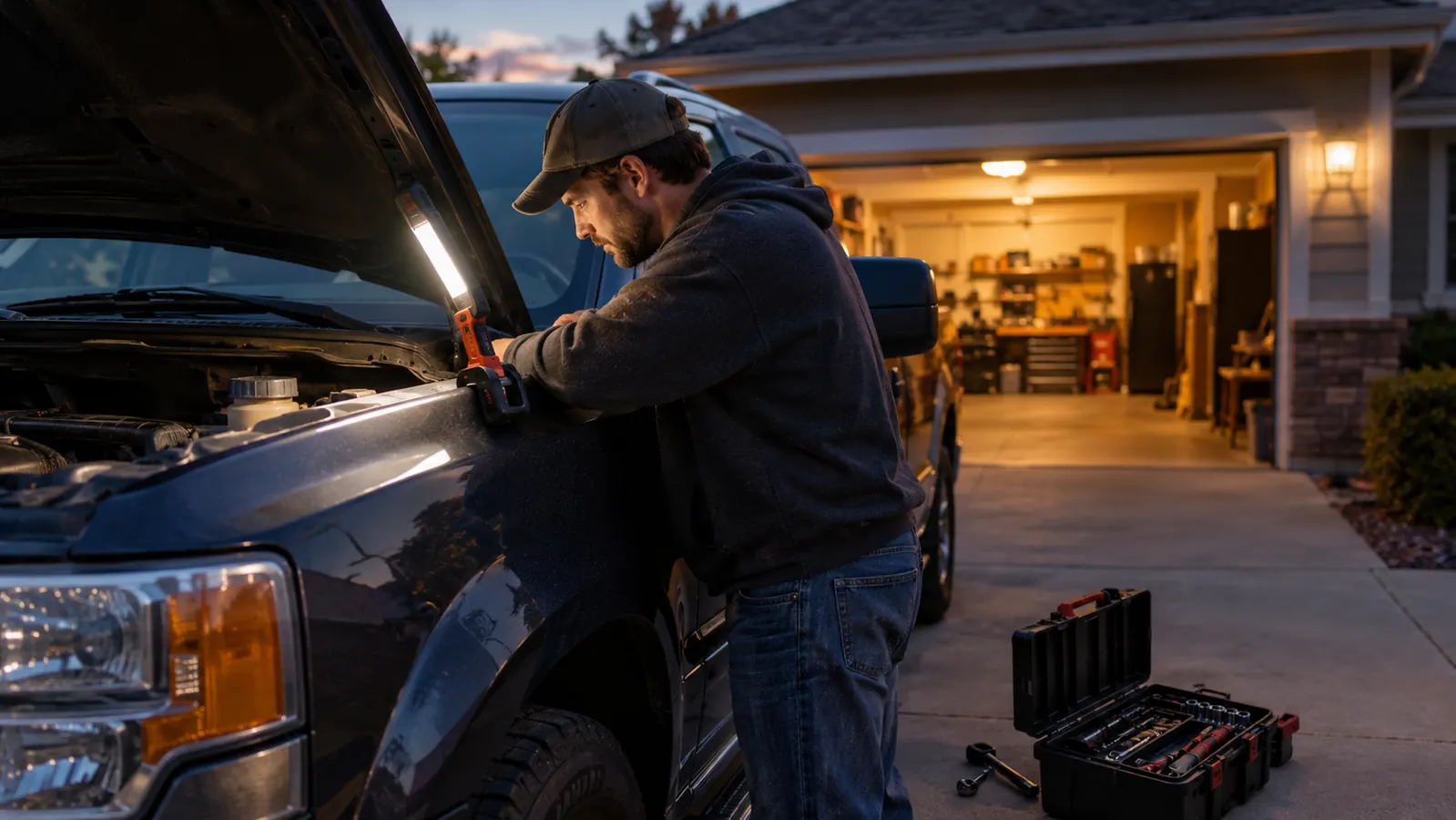
The check engine light came on a Tuesday morning, six miles into my commute, right at the light on Peoria. The truck was running fine, I'd hauled a load of tools home the night before, and still that little amber glow changes your whole day. You never assume it's nothing. You assume it's expensive.
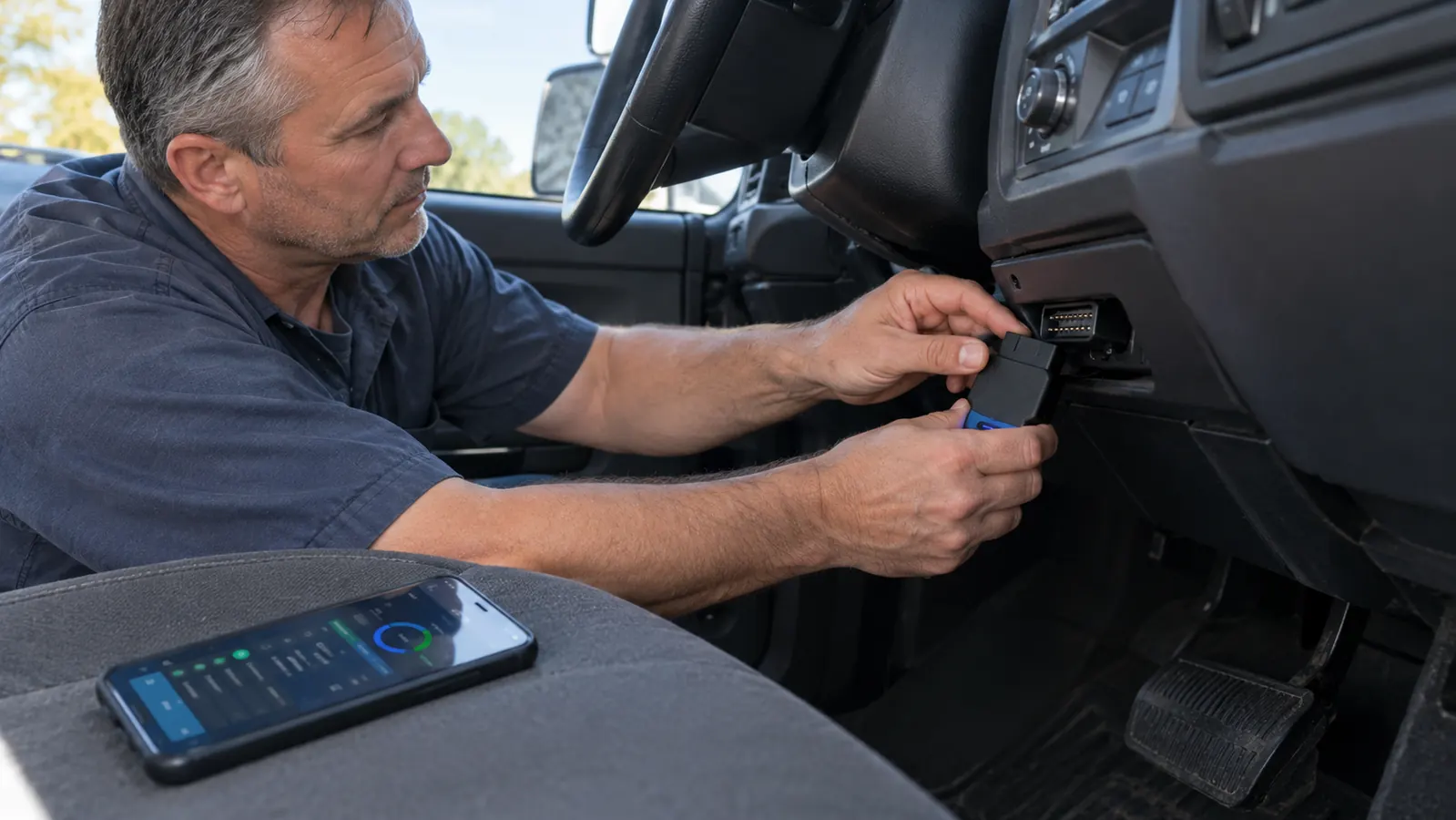
I've done this for thirty years and I still don't guess. That's what separates a mechanic from a parts-swapper. So I pulled off, grabbed the BlueDriver from the glovebox, and plugged it into the port under the dash. Thirty seconds later my phone had an answer: P0456, a small leak in the evaporative emissions system. Not a catastrophe, but a real thing I needed to chase down before it turned into something worse.
Most people hear a code like that and assume the worst. It's almost never the worst. P0456 usually means a loose gas cap, a cracked hose, or a tired purge valve, and nine times out of ten it's a simple fix. I tightened the cap, cleared the code, and drove on. Three days later the light came back, which is exactly why I hadn't paid a shop to read the same code for me.
A code is a starting point, not a verdict. So I ran a smoke test in my own driveway instead of dropping the truck at a shop, found a cracked line near the charcoal canister, and swapped in a fresh hose in about twenty minutes. The light has stayed off since. I'll be honest: I cleared the code once and hoped it was a fluke before I got serious. Hope isn't a diagnostic procedure. That one repair told me what I needed to know about the BlueDriver: the value isn't the code it reads, it's the direction it gives you before you start buying parts you don't need.
I've been carrying this scanner for the better part of two years now. It reads powertrain codes, of course, but it also reads ABS, airbag, and TPMS codes, which most cheap code readers won't touch. There's no subscription either. You buy the BlueDriver once and every code it reads is included. For a guy who does his own work in the driveway, that coverage is the whole point. It's also why I stopped carrying the two-piece reader that only handled engine codes.
Three days after I cleared P0456, the light came back. That's when the BlueDriver proved it was worth keeping: I found a cracked EVAP hose in my own driveway in twenty minutes.
When that light comes back, you'll be glad this is in the glovebox.
The BlueDriver reads engine, ABS, airbag, and TPMS codes with no subscription and nothing extra to buy. It's the scanner I reach for first in my own truck.
Amazon Check Today's Price on Amazon →About three weeks after the EVAP repair, the light came back with a different code: P0300, a random misfire. This is where a basic code reader runs out of talent. It would tell me "misfire detected" and leave me guessing between plugs, coils, and fuel pressure. I opened the BlueDriver app, pulled up the live data screen, and watched the misfire counter for each cylinder. Cylinder four was climbing like a stock ticker while the others sat flat at zero. That's not a guess. That's a direction.
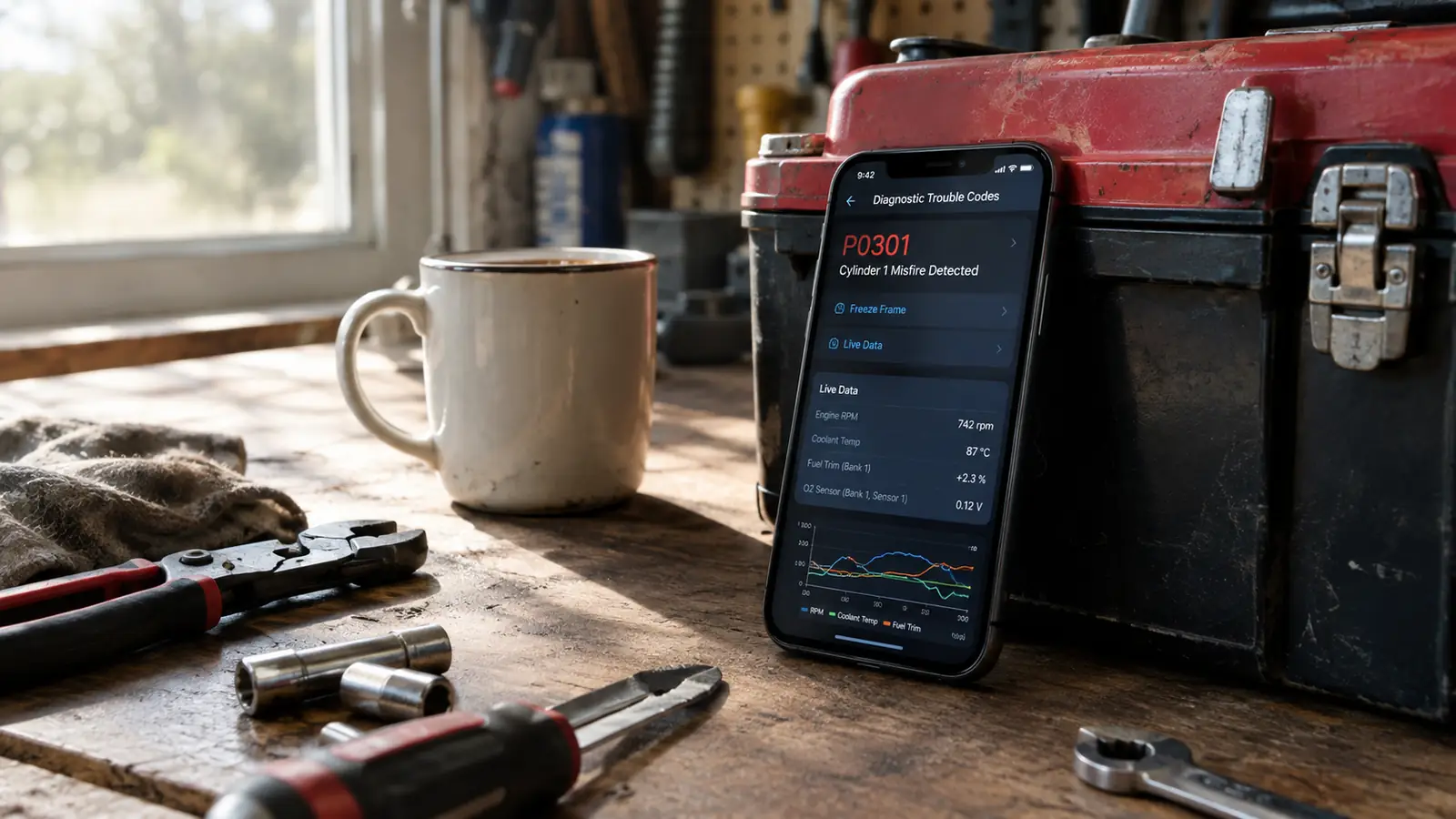
My first instinct was plugs, because this truck has well past 140,000 miles on it and I wasn't sure how much life was left in them. But the data pointed at cylinder four specifically, and on the EcoBoost the coils sit right on top of the plugs. So I pulled the number four coil, found a cracked boot, replaced just that one part, and cleared the code. The misfire counter went flat and the light never came back. Had I trusted the generic code alone, I'd have replaced six plugs and six coils, and still been guessing. The BlueDriver saved me from replacing parts that weren't broken.
Here's what sold me on keeping this particular scanner instead of the cheap one I used to carry. The BlueDriver app keeps a record of your last trips and shows whether the readiness monitors have actually run after a repair. On an EVAP system, the monitor only runs its test after a few cold starts, so you can clear a code and genuinely not know for days whether you fixed it. The BlueDriver tells you when the test has completed. That's the difference between knowing you fixed the truck and hoping you did.
Last month the neighbor across the street asked if I could look at his Subaru. The airbag light had been on for weeks and his cheap reader showed nothing at all. I plugged in the BlueDriver, got an SRS code in seconds, and found a connector under the passenger seat that had worked loose. I unplugged it, cleaned the terminals, plugged it back in, cleared the code, and the light stayed off. He'd been bracing for a shop visit over a loose connector. That right there is why I tell people to keep a real scanner in the glovebox instead of a toy that only reads engine codes.
What I'd Tell You If We Were Sitting at My Kitchen Table
If you change your own oil and you've ever paid for a shop to tell you what's wrong, buy a real scanner before you buy any other tool. I'd tell you to skip the little readers that only spit out numbers, because a number without live data is just a starting point you can't follow. Get one that shows you the sensors and the counts and the readiness monitors, and learn to read the data instead of just the code. The BlueDriver is what I reach for every time a light comes on, and it's been that way since the first week I owned it. You don't need to take my word for the brand. Take the logic: one repair done right in your own driveway pays for the tool, and everything it saves you after that is yours to keep.
Skip the guesswork and read the codes yourself.
The BlueDriver covers engine, ABS, airbag, and TPMS with no subscription. It's the first tool I tell people to buy for the glovebox.
Amazon Check Today's Price on Amazon →