
If you are standing in the oil aisle trying to decide between Mobil 1 Advanced Full Synthetic 5W-30 and Valvoline Full Synthetic 5W-30, here is the short answer: both are good oils that meet the same current API SP and ILSAC GF-6A specs, and neither one will hurt your engine. I have been turning wrenches for about 30 years, and I have drained both out of engines at 7,000 and 8,000 miles. The honest difference is not that one protects and the other does not. It is where each one sits on the trade-off between price and a few extra points of deposit and additive control. One of them is the oil I trust in my own turbo truck. The other is the oil I recommend when a customer just wants a solid full synthetic at the best price.
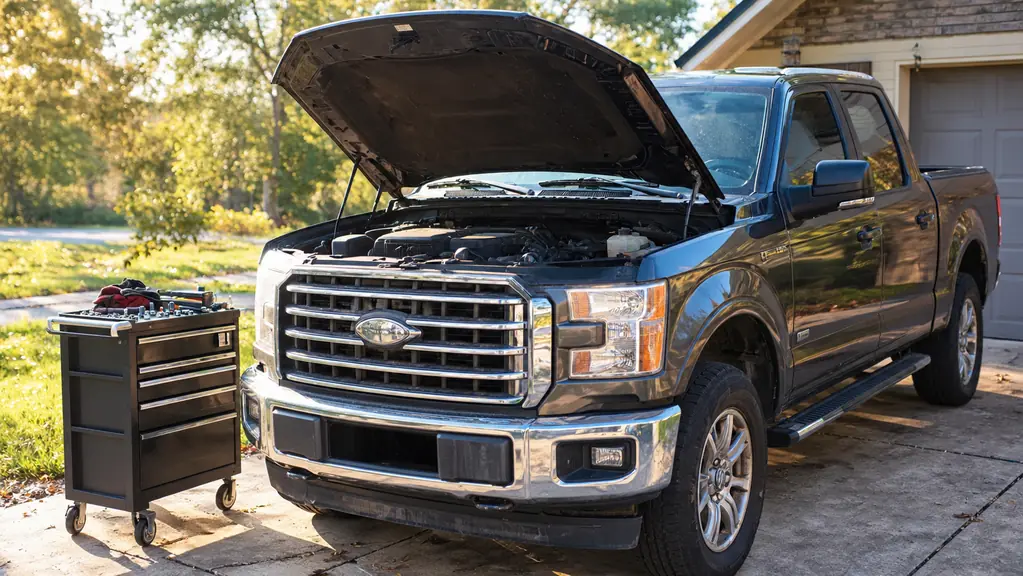
I run Mobil 1 in my own truck, a 2016 F-150 XLT with the 3.5L EcoBoost V6, which calls for 5W-30. It is past 140,000 miles now and it is my daily driver in Tulsa, where the summers run hot and the truck sits in the driveway between jobs. I have also used Valvoline Full Synthetic in customer trucks and in this same engine when Mobil 1 was not on the shelf, and I have never had a problem with it. This is the comparison I would walk you through if you were standing in my garage: what each oil does well, where one genuinely beats the other, and who should just grab the cheaper jug.
| Mobil 1 Advanced Full Synthetic 5W-30 | Valvoline Full Synthetic 5W-30 | |
|---|---|---|
| Price per 5-quart jug | Usually a little more expensive at the same store | Typically the cheaper pick at Walmart, AutoZone, and Amazon |
| Cold-start flow | Started clean at 14 degrees after a week of sitting; strong low-temperature record | Meets the same 5W-30 winter rating and cranks fine in any cold a normal owner sees |
| High-temp shear stability | Holds viscosity on 100-degree days with a trailer behind it; used-oil analysis still in grade at 8,000 miles | Meets the spec, but I have seen it thin out a little sooner in hard-use engines |
| Deposit control in turbo engines | Valvetrain clean at 140,000 miles in my EcoBoost; long track record with turbo DI engines | A good oil, but not the same track record with turbo direct-injection engines |
| OEM approvals | API SP, ILSAC GF-6A, dexos1 Gen 3, Ford WSS-M2C961-A1 | Same marks: API SP, ILSAC GF-6A, dexos1 Gen 3, Ford WSS-M2C961-A1 |
| Availability | Every Walmart, AutoZone, O'Reilly, and Amazon, plus most parts stores | Just as easy to find, usually sitting right next to it |
| Long-interval strength | Holds its additive reserve at 7,500 to 10,000 miles on a normal duty cycle | Fine at 5,000 to 7,500; I would not push it as far |
| High-mileage engines | Works fine past 140,000 miles; no special chemistry needed | Also works fine; if you want a dedicated high-mileage formula, Valvoline MaxLife is the separate pick |
| Best for | Turbos, hot climates, towing, and longer intervals | Budget-minded DIYers on a standard 5,000-mile schedule |
Where Mobil 1 Wins
The first place Mobil 1 earns its keep is a turbocharged engine. My 3.5L EcoBoost runs hot, especially in July and August when it is over 100 degrees in Tulsa and the truck is idling in traffic. Turbos cook oil, and the additive package matters more than the base oil. Mobil 1 Advanced Full Synthetic has a long history with turbo engines, and I have seen the inside of enough of them to trust it. When I pulled the valve covers off this truck at around 135,000 miles to fix a small gasket leak, the valvetrain was clean, no varnish, no sludge. That is the kind of thing that shows up in the oil pan, not in the marketing. I did not expect a brand-new engine in there, but I also did not expect it to look that good.
The second place is long intervals and hard use. If you are the kind of owner who runs 7,500 to 10,000 miles between changes because you spend your week on the highway, Mobil 1 holds its viscosity and its additive reserve longer. I sent a used-oil sample from this truck to a lab at around 8,000 miles a couple of years ago, and the viscosity was still in grade with plenty of life left. It also handles heat better when you are towing or hauling. I spent one August weekend pulling a car trailer loaded with a parts car, about 400 miles round trip in 100-degree heat, and the oil temperature stayed where I wanted it. Valvoline Full Synthetic is a perfectly good oil, but if I had to pick one to carry a trailer through a Tulsa summer, I would pick the Mobil 1.

Where Valvoline Wins
Valvoline wins on price, and that is not a small thing. If you change your oil every 5,000 miles like clockwork and you are driving a commuter car that never sees a trailer hitch, the difference adds up fast. The Valvoline Full Synthetic 5W-30 jug is usually the cheaper pick at the same store, and over three or four changes a year, that is real money you can put toward a filter and a new drain plug washer. For a lot of the customers I see, the correct choice is the oil that is good enough and cheap enough that they actually change it on time. An oil that sits in the garage because you are waiting for a sale protects nothing.
The second place Valvoline wins is being easy to buy and easy to justify. It is on the shelf at Walmart, AutoZone, O'Reilly, and Amazon, usually right next to Mobil 1. It carries the same API SP and dexos1 Gen 3 marks, so if you are under warranty and the manual says 5W-30 with API SP, Valvoline Full Synthetic satisfies it the same way. I have used it in customer cars ranging from a 2014 Accord with the 2.4L to a 2018 Silverado with the 5.3L, and I have never seen a problem from it. If your engine is a simple port-injected motor that is not turbocharged and does not run hot, you are paying extra for Mobil 1's strengths and not using them. That is not a sin, but it is not a smart buy either.
The oil I trust in my own turbo at 140,000 miles
Mobil 1 Advanced Full Synthetic 5W-30 meets the API SP and dexos1 Gen 3 specs your owner's manual asks for, and it is the jug I reach for when the EcoBoost is due. Check today's price on Amazon and you can have it at your door before the weekend.
Amazon Check Today's Price on Amazon →How I Compared These Two
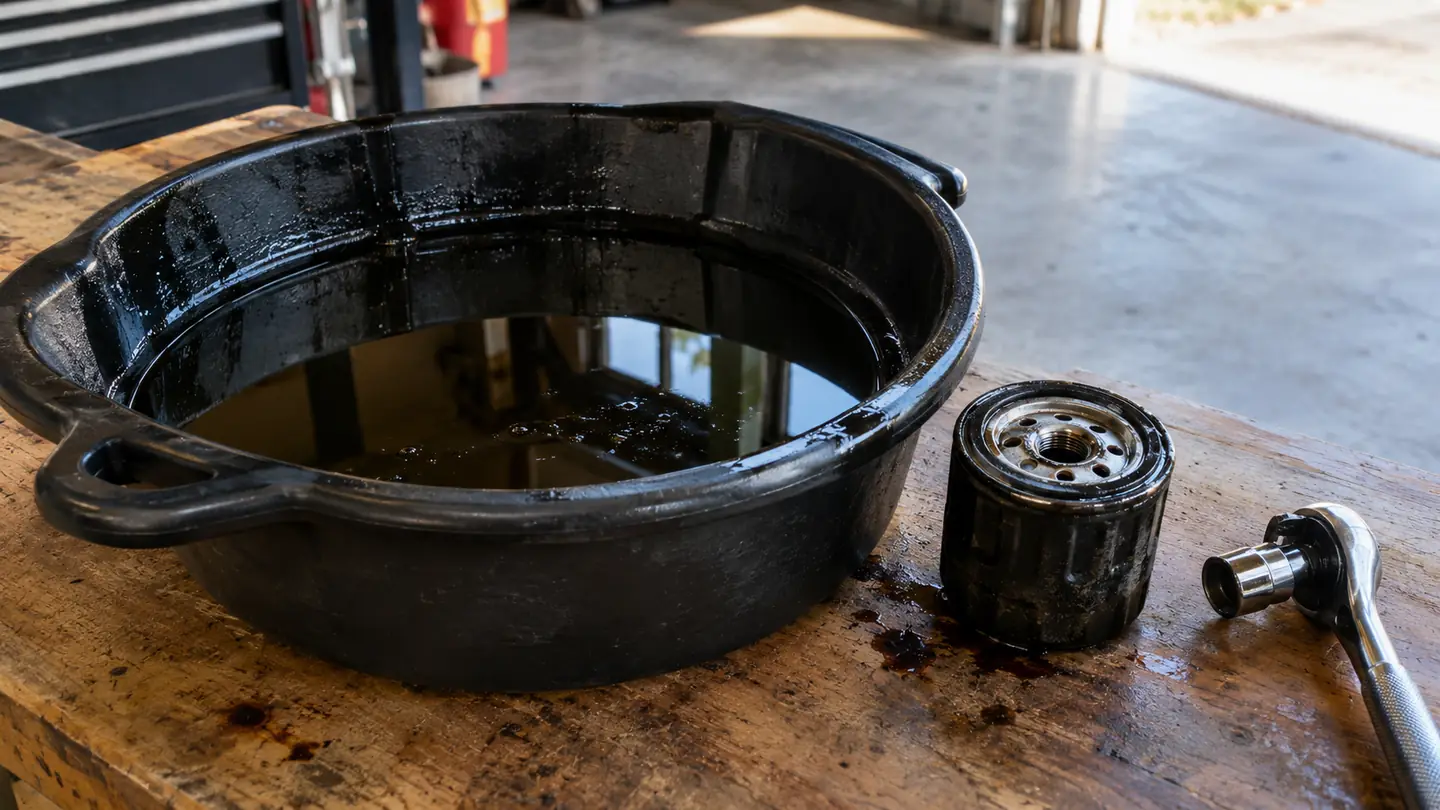
I did not do this comparison in a lab. I did it the way most of you will: in a driveway, with a drain pan, a 15mm socket, and a filter wrench. Over the last two years I have run Mobil 1 Advanced Full Synthetic 5W-30 in my own truck for about 60,000 of its 140,000 miles, on a 7,500-mile schedule with a quality filter. The 3.5L EcoBoost takes six quarts with a new filter, so I buy the 5-quart jug and one extra quart, and I keep a note on the oil jug so I know which change it is. I have used Valvoline Full Synthetic 5W-30 in customer vehicles over the same stretch, and I have drained plenty of both out of engines that came in for other work.
The things I look for when oil comes out are metal, sludge, and how thin it pours. I check the drain pan for glitter, I look at the fill cap and valve cover for varnish, and I pay attention to how the engine sounds at cold start after a week of sitting. I also read the labels like a lawyer: the API doughnut, the ILSAC starburst, the dexos1 license. Both of these oils carry the same current marks, so the certification argument is a tie. What separates them is how the additive package holds up under heat and time, and that is where my experience tilts toward Mobil 1 in a turbo. In a plain commuter engine, I honestly could not tell the difference from the driver's seat.
What the Labels on Both Jugs Actually Tell You
Look at the back of both jugs and you will see the same alphabet soup: API SP, ILSAC GF-6A, and a dexos1 Gen 3 license on both. Those marks matter because they are certifications, not marketing. API SP covers timing-chain wear protection and low-speed pre-ignition, which is the knock problem you get in turbo direct-injection engines. ILSAC GF-6A is the fuel-economy and deposit standard that most automakers reference for 5W-30. dexos1 Gen 3 is General Motors' own spec, and while you do not need it for a Ford, it is a useful sign that the oil was tested for deposit control in direct-injection engines. The EcoBoost is a direct-injection engine, so deposit control is not an abstract worry. It is the difference between clean valves and a walnut-blast cleaning at 80,000 miles.
For the 3.5L EcoBoost in my truck, Ford calls for 5W-30 that meets WSS-M2C961-A1. Mobil 1 Advanced Full Synthetic lists that on the bottle, and so does Valvoline Full Synthetic, which is why I do not lose sleep when I have to use one or the other. The spec on the bottle matters more than the color of the label. If an oil meets the spec your manual lists, it is not a compromise, it is a correct choice. The brand difference is in the margins: how long the additive package lasts, how the oil handles sustained heat, and how clean the engine stays at 140,000 miles. Those margins are exactly what the rest of this article is about.
At 140,000 miles I have had the valve covers off this EcoBoost, and the valvetrain was clean, no varnish, no sludge. That is the proof that matters to me.
Who Should Buy Which
Buy the Mobil 1 if you drive a turbocharged engine, if you live somewhere with real summers, if you tow or haul, or if you like stretching your oil change to 7,500 miles or more. That is me, and that is why it is in my truck. The EcoBoost is a direct-injection turbo that runs hot, and I would rather pay a little more for the oil with the longer track record in exactly that kind of engine. If your truck does the same work mine does, this is the easy call. I would not try to talk you out of Valvoline if it is what your budget allows, but I would also not pretend the two are identical in a hot turbo.
Buy the Valvoline if you want a solid full synthetic at the best price, you change oil every 5,000 miles, and your engine is a normally aspirated commuter motor that does not run hot. You are not giving up protection in that use case; you are just not paying for headroom you will not use. One more thing worth saying: both of these beat a conventional oil in the same engine, and both beat whatever is cheapest on the bottom shelf. The biggest difference in engine life is not the brand on the jug. It is whether you change it on time. A good oil at 5,000 miles beats a great oil at 12,000 every time.
The Bottom Line
Neither of these oils is a wrong answer. If your truck is a turbo that works hard in the heat, Mobil 1 Advanced Full Synthetic is worth the extra money because its deposit control and shear stability are proven in exactly that kind of engine. If your car is a commuter and you change oil on schedule, Valvoline Full Synthetic gives you the same API SP protection for less. I run Mobil 1 in my own EcoBoost, and I would tell a friend with the same truck to do the same. For everyone else, buy the one that fits your budget and change it on time.
Still deciding? This is the jug I keep buying
Mobil 1 Advanced Full Synthetic 5W-30, 5-quart jug. It meets the EcoBoost spec, handles Tulsa heat, and it has been in my truck for the last 60,000 miles. Grab it on Amazon and the oil aisle debate is over.
Amazon See Mobil 1 5W-30 on Amazon →