
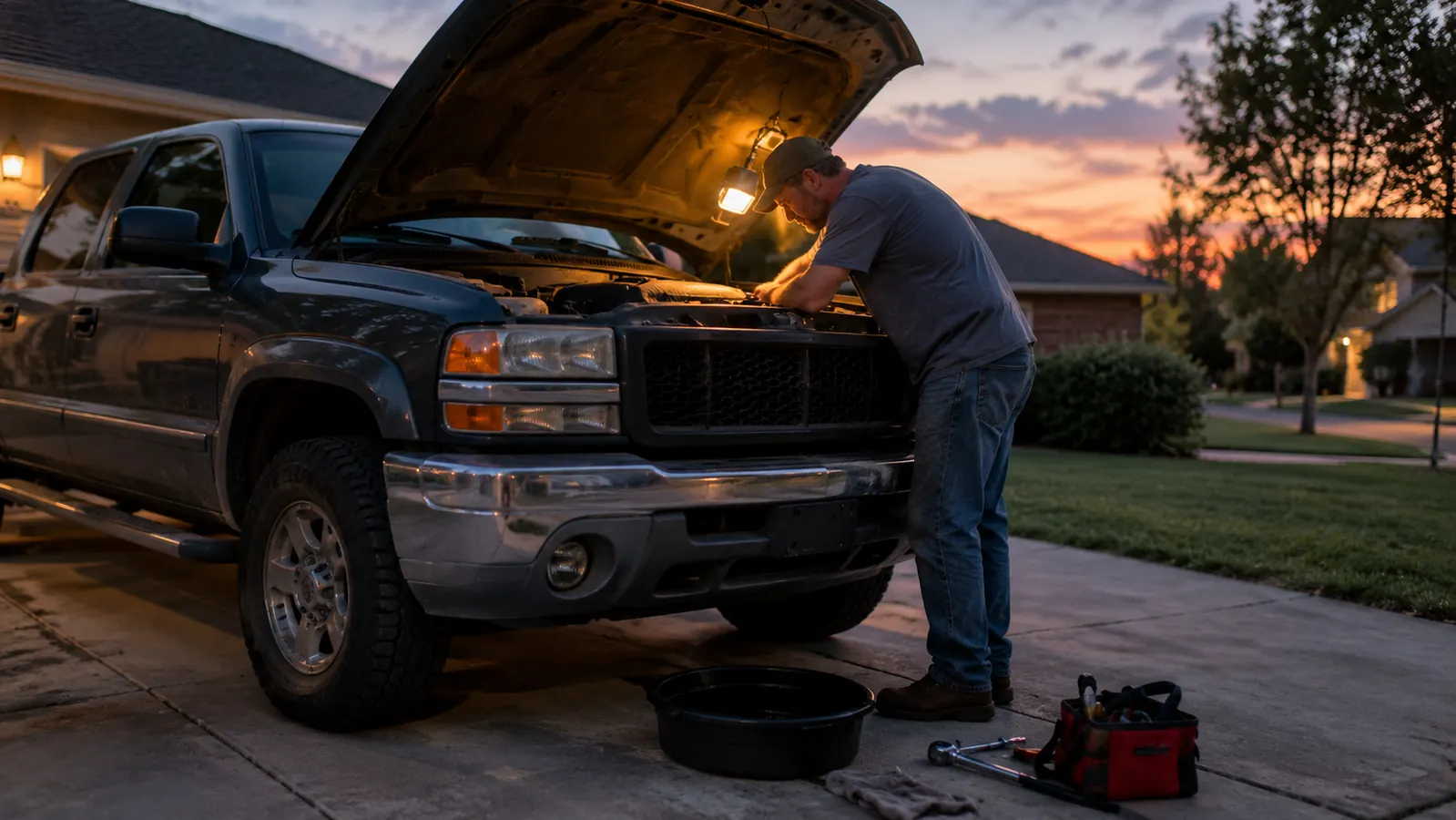
I have been turning wrenches for a living for about thirty years, and I have changed the oil in everything from a 1979 F-150 with a six-cylinder to a 2023 Silverado with a turbo diesel. But this review is not about all of those trucks. It is about one truck. My truck. A 2016 Ford F-150 XLT with the 3.5L EcoBoost V6, silver, just past 140,000 miles, and it has been running Mobil 1 Advanced Full Synthetic 5W-30 for the last five oil changes. This is the honest version, the one I would give you if you were standing in my driveway in Tulsa with the drain pan out and a new filter in your hand. I will tell you what I like, what I do not like, and what the label does not say.
Why do an honest review at all? Because motor oil is the one thing every driver buys and the one thing most of us choose by habit, by price, or by whatever the guy on the forum said. I have seen what a cheap conventional oil does to a neglected engine, and I have also seen people pay extra for a name and assume the name does the work. Neither approach is right. What actually protects an engine is the right viscosity, the right API spec, a clean filter, and a change interval you stick to. The brand matters less than the routine, and that is the first thing I want you to remember.
The Quick Verdict
A solid, widely available full synthetic that has protected my 140,000-mile EcoBoost through Tulsa summers and cold winters. The marketing oversells the word 'advanced,' but the oil itself does the job. Buy it when the price is sane and change it on schedule.
Amazon Check Today's Price →The 5W-30 I keep going back to
If you just want a full synthetic that handles heat, cold starts, and 5,000-mile intervals without drama, this is the one I reach for in my own truck. Check the current price on Amazon before you decide.
Amazon Check Today's Price on Amazon →How I've Used It
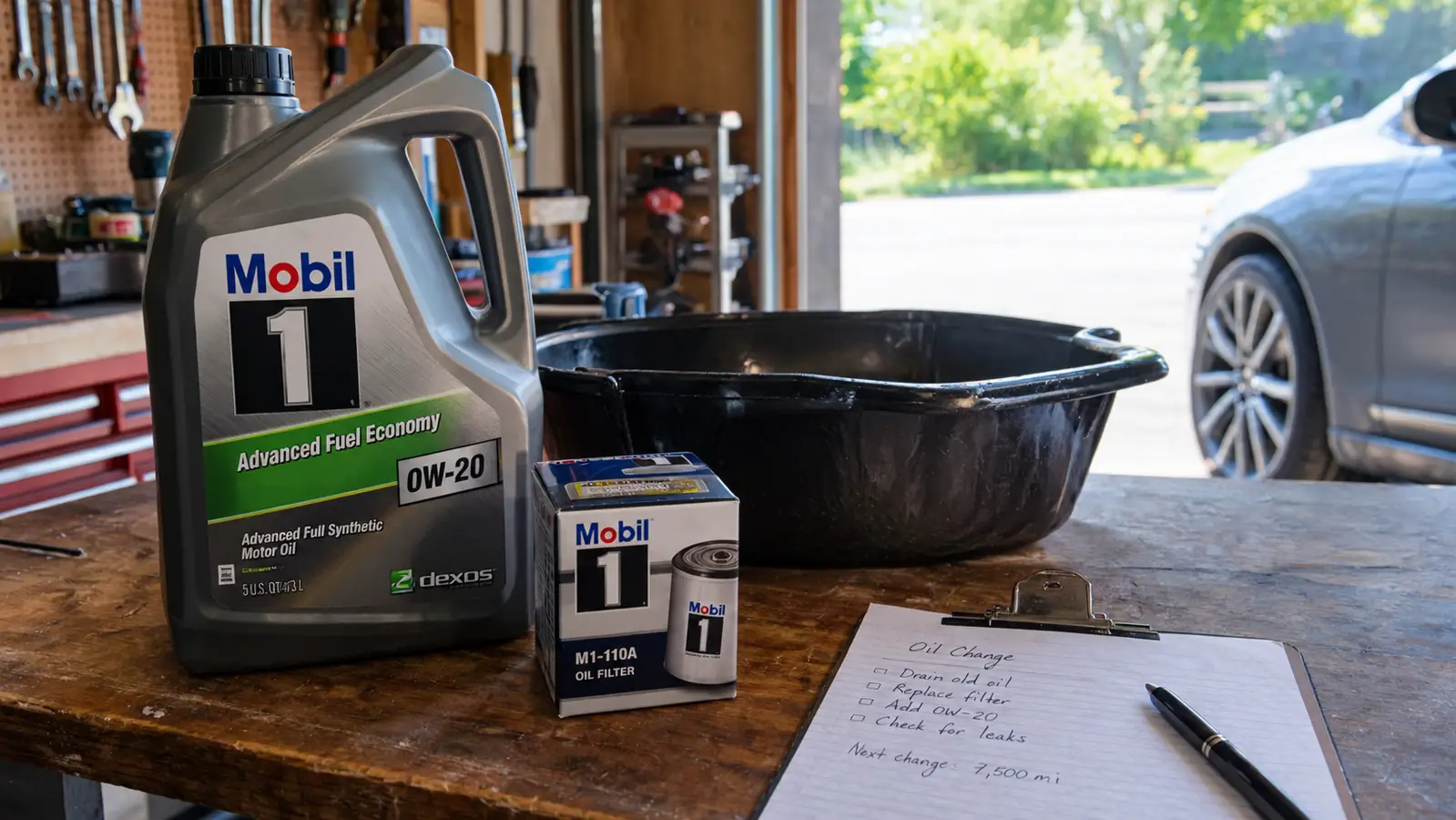
My truck is not a garage queen, and I do not baby it. It is a 2016 F-150 XLT with the 3.5L EcoBoost, and it crossed 140,000 miles on a Tuesday in March. It hauls lumber for projects around the house, pulls a small trailer when I need to move an engine or a transmission, sits in Tulsa traffic in July when it is over 100 degrees, and sits outside overnight in January when it drops into the teens. I change the oil myself in the driveway, on ramps, usually right at 5,000 miles. I have run Mobil 1 Advanced 5W-30 for the last five changes, about 25,000 miles, and I keep a log on a clipboard in the garage with the date, the mileage, the filter part number, and how much oil came out at drain time.
The EcoBoost is a turbocharged engine, and turbo engines are harder on oil than a naturally aspirated V8. The oil runs hotter, the turbo seals work harder, and in cold weather short trips can push fuel past the rings and into the pan. That is the real reason I wanted a full synthetic, not because the jug said 'advanced.' I wanted a base stock that would hold up at temperature and an additive package that would keep the viscosity from dropping. Mobil 1 Advanced sits in the middle of Mobil's own lineup, above the Super Synthetic sold at warehouse clubs and below the Extended Performance line. I picked the middle one because it is what the owner's manual spec calls for and it is what I can find at any parts store in town.
One honest note on how I judge an oil, because a lot of reviewers tell you they can feel a difference in the seat of their pants. I cannot. If you tell me an oil change added five horsepower, I will smile and keep walking. What I trust is a used-oil analysis, the way the oil looks and smells at drain time, how much the engine consumes between changes, and whether the cam phasers and turbo stay quiet. On all of those, Mobil has been boring, and boring is the highest compliment a mechanic can pay a lubricant.
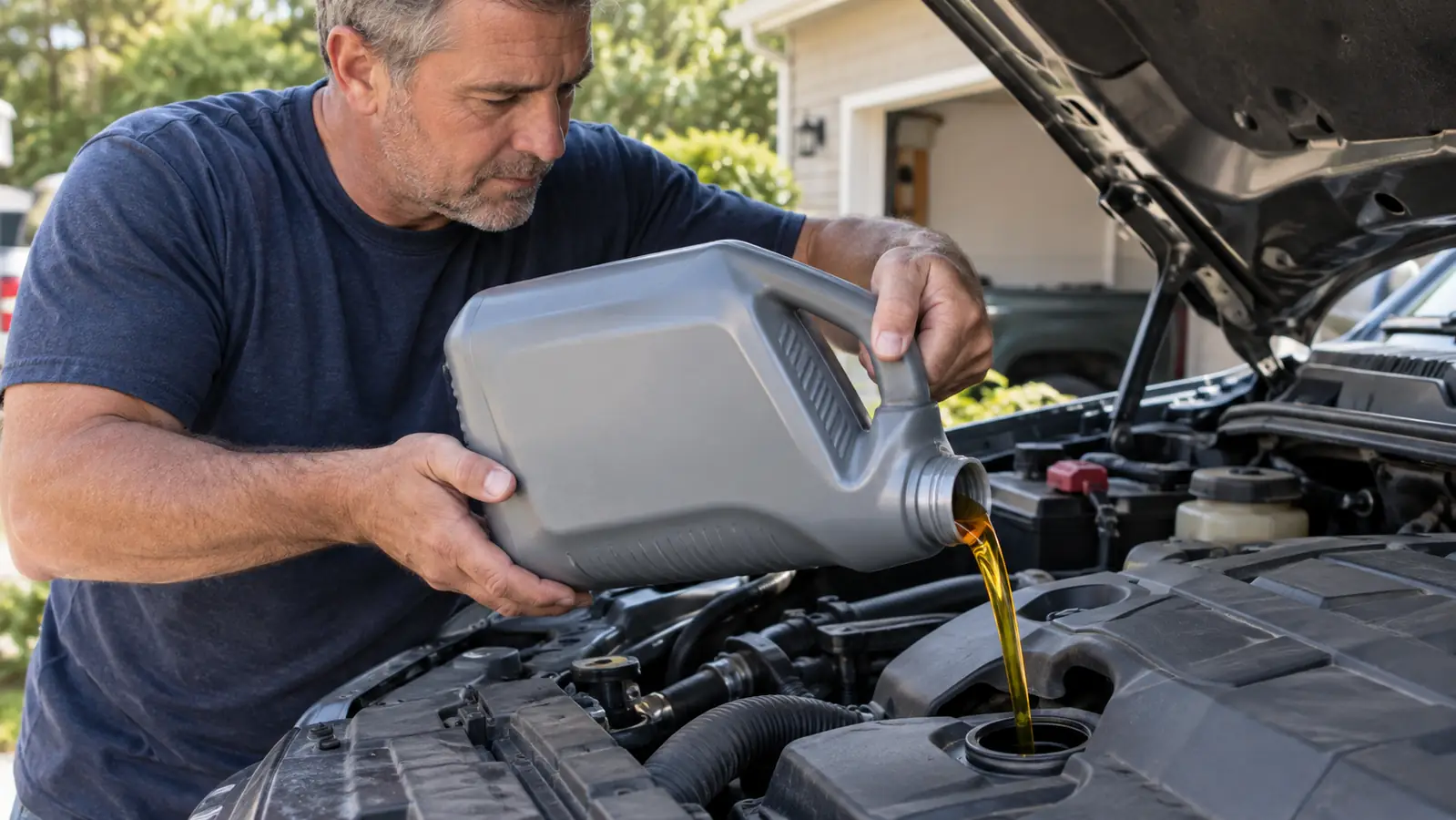
What Nobody Tells You About Full Synthetic
Here is the part the advertising does not want to dwell on: most name-brand full synthetics on the shelf today are very good, and the differences between them matter less than the interval and the filter. The base stock in a full synthetic is more uniform than conventional oil, it pours better at 15 degrees, and it resists thinning at 230 degrees. Those are real advantages, not marketing. But Mobil 1, Valvoline, Pennzoil, Castrol, and the store brands all have to meet the same API and ILSAC standards to carry the same certification marks. The spec number on the back of the jug is what actually protects your engine. The name on the front is what protects the company's market share.
What nobody tells you is that the word 'advanced' on this jug is a marketing tier, not a technical one. It tells you which shelf the company wants you to buy from. The real information is in the API donut on the back label, the dexos rating if your car calls for it, and the viscosity grade. For my truck that means 5W-30 with the current API SP rating. Mobil 1 Advanced carries it, and so does the store brand. I am not saying that makes them identical, because the additive packages do differ and the price usually reflects that. I am saying the label language is a lot louder than the actual chemical difference.
And here is the other thing nobody tells you: full synthetic will not fix an engine. It will not stop a leaking rear main seal, it will not bring a neglected engine back, and it will not clear a clogged PCV system. I have had customers swear that switching to a premium synthetic cured their oil consumption. Sometimes it genuinely slows it down, because a cleaner, more consistent oil can let stuck rings move again. But if your engine is going through a quart every 500 miles, the brand of oil is not your problem. That is a mechanical problem, and no bottle on the shelf fixes it. I tell people that before they spend the money, because an honest mechanic saves you the disappointment.
The 140,000-Mile Report
Now the part I can actually testify to, because I keep records. Over the last 25,000 miles on Mobil 1 Advanced 5W-30, my truck has used about half a quart between 5,000-mile changes. That is normal for an EcoBoost at this mileage, and it tells me the rings and turbo seals are still doing their job. The oil drains out darker than it went in, which is the point of oil, and it does not smell like gasoline even after a January of short trips around town. In October, at 135,000 miles, I sent a sample to a lab for a used-oil analysis. The wear metals came back in the normal range for this engine family, and the silicon reading was low, which means the air filter is doing its job and no dirt is getting in.
Cold starts are where I notice the difference most. On a January morning when the truck has sat in the driveway overnight at 15 degrees, it cranks and settles into a smooth idle in a few seconds, without the lifter clatter you hear from an old conventional oil that has thickened in the pan. The 5W-30 rating means the oil flows at cold temperature like a 5-weight oil and behaves like a 30-weight oil at operating temperature. That cold flow is the reason I moved to full synthetic years ago, and it is the reason I stay with it in a turbo engine that has to start clean at 6:00 in the morning.
Summer is the other test, and last July I had a good one. I pulled a loaded trailer from Tulsa over to eastern Oklahoma, two hours of two-lane with the oil temperature gauge sitting around 230 degrees. The oil pressure never flickered and the engine never sounded strained. I have done the same trip on a conventional blend years ago and the oil came out noticeably thinner at drain time, almost like the viscosity had given up. With this synthetic it came out dark but still felt like oil between the fingers. I am not going to claim Mobil 1 is the only synthetic that would have handled that trip, because it is not. But I can tell you it handled it, and that is the standard I care about.
Where Mobil 1 Falls Short
For the sake of an honest review, here is what I do not love. First, the price. Mobil 1 Advanced is routinely priced above Valvoline and above the house brands, and the price swings week to week. Last spring I watched the price jump by close to half again in the space of a month, for the same jug, same spec, same everything. When that happens, it is hard to justify paying a premium for an oil that meets the same API spec as the cheaper bottle next to it. I buy it when the price is sane and I wait when it is not. If you are paying the premium price every single time, you are paying for the name as much as the chemistry.
Second, the marketing. The jug says 'advanced' and 'full synthetic' and leaves you with the impression that you are buying the top of the line. You are not. Mobil sells an Extended Performance version with a stronger additive package and a longer drain interval claim. That is the top of the line. The oil in this review is a very good middle-tier product, and that is fine, because it is what my truck needs at a 5,000-mile interval. But the label is designed to make you feel like you are at the top when you are actually in the middle of the company's own lineup, and I think that is worth knowing before you buy.
Third, the jug itself. The 5-quart size is perfect for a lot of cars, but my truck takes six quarts with the EcoBoost, so I always have a partial jug left over. That means I have a half-used jug sitting in the garage between changes, and I have to remember to store it upright so it does not leak past the cap. It is a small thing, but it is the kind of detail that shows up in real life and never shows up in the reviews. It is not a reason to avoid the oil. It is just the honest truth about buying it in this size.
Alternatives I Considered
Because I am a mechanic, people assume I have strong brand loyalty. The truth is I have strong evidence loyalty. I have run Valvoline full synthetic in customer cars for years and it is a good oil. Pennzoil's Ultra Platinum tests well. The warehouse club brands and the store brands are made by major refiners and meet the same spec. If you change on schedule and your engine is healthy, any of these will protect it. The reason I keep coming back to Mobil 1 in my own truck is consistency and availability. I can find it at any parts store in Tulsa, I know exactly what I am getting, and the oil analysis confirmed it is doing the job.
The comparison I get asked about most is Mobil 1 versus Valvoline, because on any given day the two jugs sit side by side at the same price. In my experience, at the same viscosity and the same API spec, the difference shows up at the edges: how the oil behaves on a 15-degree cold start, and how it holds up at the end of a long interval in a turbo engine. I have drained Mobil 1 out of a hard-used engine and thought it still had life in it. I have said the same thing about Valvoline. My honest advice is to pick one, stick with it, and change it on time. You will probably never know the difference, and that is not a criticism of either oil.
I will also mention the one time I tried to save money and it did not stick. A few years ago I switched to a house brand full synthetic for two changes to cut costs. The oil was fine, and the analysis would probably have come back fine too. But I could not find the same brand consistently at the same store, and one time they had changed their supplier and the label looked different. For a guy who keeps a log and wants one less variable in the equation, that was enough to send me back. Consistency is worth something, even if it is hard to put a number on it.
What I Liked
- Genuine full synthetic with a solid additive package, and my used-oil analysis at 135,000 miles came back with wear metals in the normal range
- Flows well on 15-degree cold starts and held up on a 230-degree summer pull with a loaded trailer
- Easy to find anywhere, with consistent quality from jug to jug, which matters more than the label claims
- No fuel smell in the oil after winter short trips, a good sign for a turbo engine
- Meets the current API SP spec, so it is safe for modern engines with cam phasers and turbos
Where It Falls Short
- Priced above the competition, and the price swings week to week; full premium price is hard to justify
- The word 'advanced' is a marketing tier, not the top of the line; Mobil's Extended Performance sits above it
- The 5-quart jug leaves a partial jug for trucks that take six quarts, and most F-150s take six
After 25,000 miles and one lab analysis, my truck has used about half a quart between changes and the wear metals came back normal. That is the part of this review I would bet money on.
Who This Is For
Buy Mobil 1 Advanced if you change your own oil and you want a full synthetic that is easy to find and hard to get wrong. It is a strong choice for turbocharged engines that run hot, for trucks and cars that sit outside through a Midwestern winter, and for anyone who wants a known brand without stepping up to the extended-performance price tier. If you change at 5,000 miles like the manual suggests and you are not trying to stretch the oil to 10,000, this is all the oil you need. That is the short version, and it is the honest one.
Who Should Skip It
Skip it if you change oil once a year on a low-mileage car that never works hard, because a cheaper full synthetic will do the same job for a lot less money. Skip it if you want the longest possible drain interval, because Mobil's own Extended Performance line is built for that and the regular Advanced is not. And if the price has jumped this week, skip it until it comes back down, because the chemistry in the jug did not change, only the price tag. What matters is the spec, the interval, and the filter. The brand is the last thing I would argue about.
The oil I trust in my own truck
If you are on the fence, this is the 5W-30 I keep going back to after 140,000 miles. Grab a 5-quart jug when the price is reasonable and change it on schedule.
Amazon Check Today's Price on Amazon →