
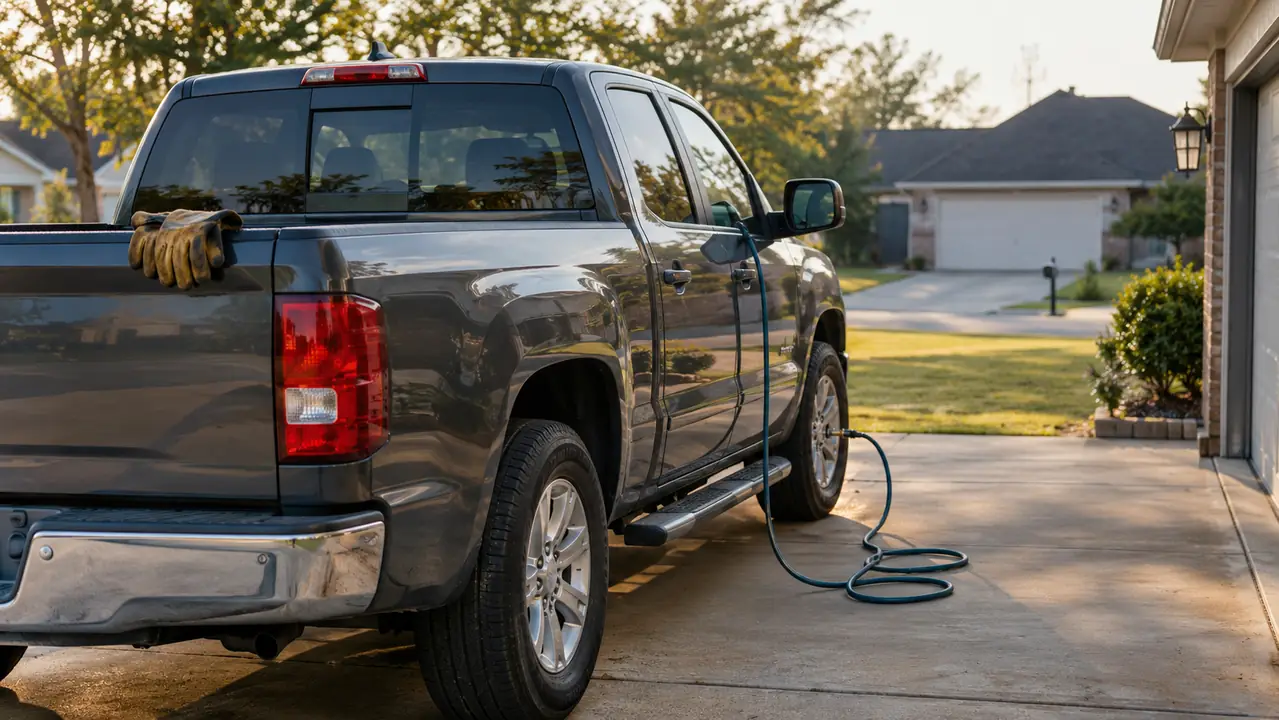
Every week in the shop I get the same question, usually from a guy standing next to a flat tire: should I buy one of those little 12V inflators, or pay up for a cordless one? My answer, after using both for years, is simpler than most people expect. For a do-it-yourself owner who keeps an inflator in the truck, the AstroAI AIRUN H 12V unit covers the job with fewer things to go wrong. Cordless inflators win in one specific situation, and if that situation is yours, you will know it before you finish reading. And the answer has nothing to do with which one looks better on a workbench.
Here is the plain version. A corded 12V inflator uses the truck's own electrical system, so the air keeps coming until the job is done. A cordless inflator carries its own battery, which means one more thing to charge, one more battery that ages, and one more way to get caught flat. Literally flat. The cordless inflator's only real advantage is that it works away from the vehicle. If you inflate trailer tires at a storage lot or boat tires at a ramp, that advantage is worth the extra money. If you do not, the AstroAI is the honest buy.
How I Tested Both
I run a general repair shop in Tulsa, and my daily driver is a 2016 Ford F-150 XLT with the 3.5L EcoBoost, past 140,000 miles. The tires on it are E-rated truck tires, which need more air than a passenger car tire, so I am harder on an inflator than most weekend DIYers. Over the past year I topped off all four corners with the AstroAI and with two different cordless inflators, one a customer asked me to check before a trip and one a neighbor brought over. That gave me a fair side-by-side in the same driveway, on the same tires, in the same Oklahoma heat. The shop sees every kind of tire, so I also used the AstroAI on customer cars, but the comparison that matters is the one in my own driveway.
The test was not scientific. I did what you will do. I set the target pressure, walked away, and came back when the unit shut itself off. I used the built-in gauges instead of a separate one, because that is how a real owner uses them. I also let both cordless units sit for two weeks without charging them, the way a lot of owners actually treat them, to see whether they were still ready when I grabbed one on a Sunday morning. One was. The other was not, and that tells you most of what you need to know about the difference. I topped off cold tires in the morning and hot tires after a highway run, because both behave differently.
For the record, I checked the AstroAI against a shop gauge before I trusted its auto shut-off. It was within a pound at 80 PSI, which is plenty for driveway work. I also ran it long enough to fill a completely flat tire, not just top off a low one, because that is the job that separates an inflator from a toy. A toy is something you use twice and forget. An inflator is something you grab at 6 in the morning on the way to work, and it has to work the first time, every time.
| AstroAI 12V | Cordless | |
|---|---|---|
| Price | Typically a fraction of the cost of a cordless with similar output | Convenience carries a real premium |
| Power source | Steady current from the truck's charging system | Rechargeable battery, output sags as it drains |
| Inflation speed | Consistent airflow from start to shut-off | Quick on a full charge, slower when the battery is low |
| Works away from the truck | Only as far as the 9.8 ft cord reaches | No cord, so it reaches trailers, boats, and other cars |
| Dead vehicle battery | No 12V power means no inflation | Still works if its own battery is charged |
| Maintenance | Nothing to charge and no battery to replace | Battery needs regular charging and eventual replacement |
| Ready when you need it | Ready as long as the truck starts | Ready only if you remembered to keep it charged |
| Tire types | Car, SUV, motorcycle, and bike tires | Same range, plus air mattresses and balls |
Where the AstroAI 12V Wins
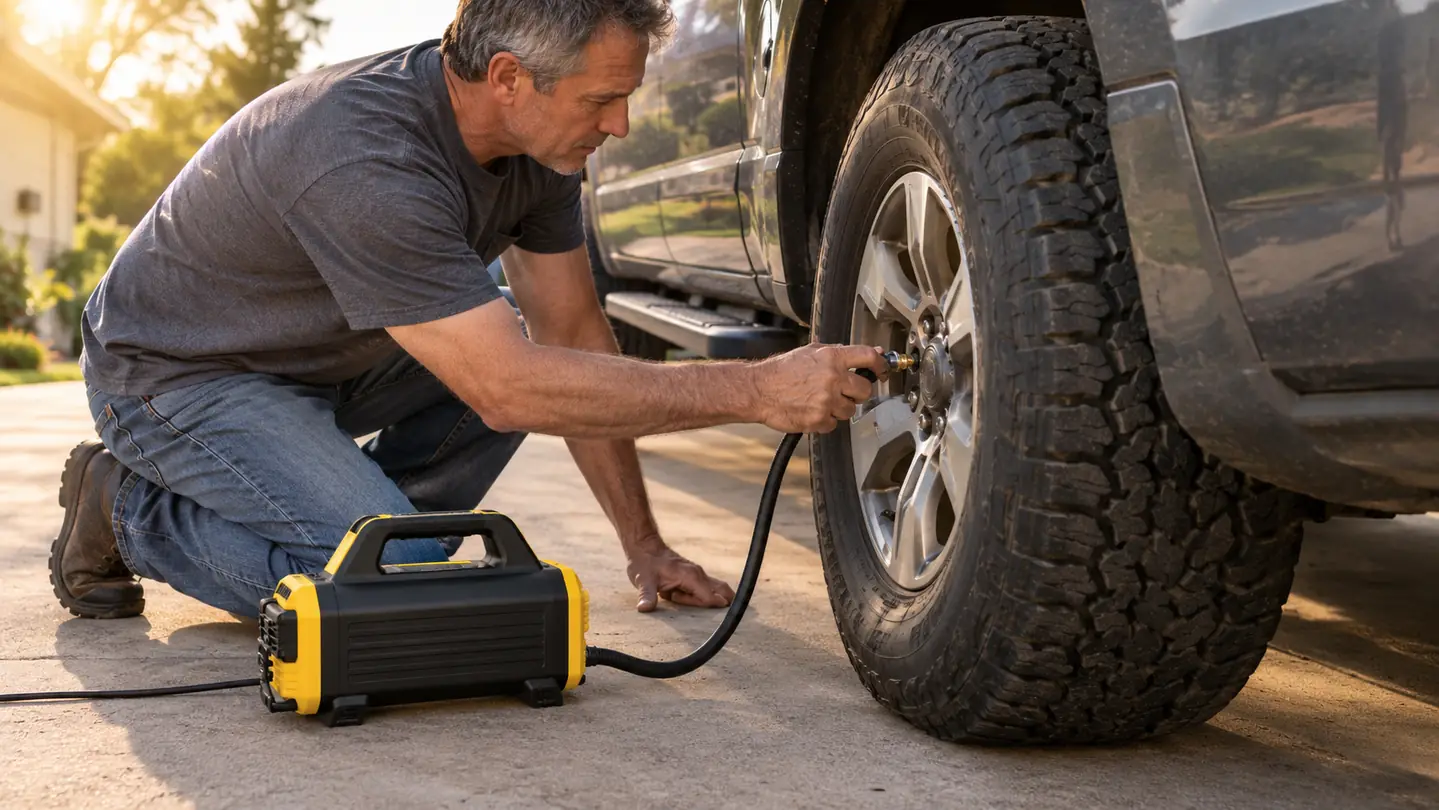
The first thing you notice is that the air does not slow down halfway through the job. The 12V plug draws steady current from the truck's charging system, so the compressor runs at the same speed from the first pound to the last. The cordless units I tested were quick on a full charge, then noticeably slower once the battery dropped below half. On a truck tire, that is the difference between two minutes and five minutes, and on a hot Tulsa afternoon, five minutes feels like an hour. That steady output is the whole ballgame, because an inflator that fades on the last ten pounds is the one you stop using.
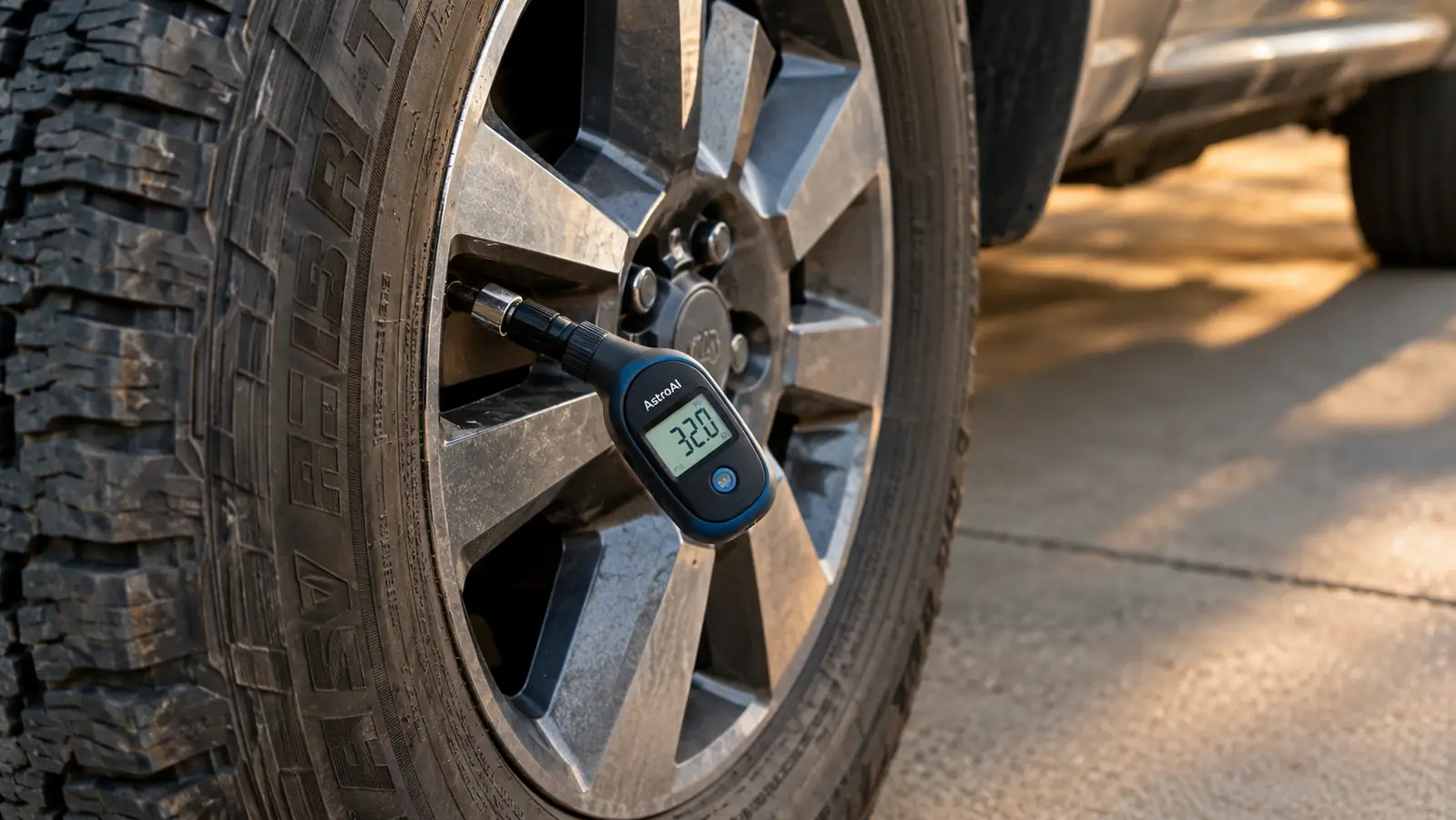
Then there is the maintenance side. The AstroAI has no battery to keep charged, no battery to replace in three years, and no charging cord to lose. It lives behind the back seat of my truck, and as long as the truck starts, it is ready. The digital gauge and auto shut-off do exactly what they promise: set it to 80 PSI and it stops on its own. That is not a fancy feature anymore, it is the difference between a tool you actually use and a tool you avoid because you are not sure when it will stop. The 9.8 ft cord also gives you room to stand up and work instead of kneeling in the water next to the curb.
Where Cordless Tire Inflators Win
Give credit where it is due. A cordless inflator works anywhere, and that is a genuine advantage, not a marketing line. If you keep a travel trailer at a storage lot, or a boat on a lift, or a second car parked at a relative's house, a cordless unit means you are not dragging the truck over to reach the flat. No cord, no 12V port, no engine running. You grab it, walk over, and inflate. For that one job, cordless is the right tool, and I would not argue with anyone who buys one for it. I have recommended cordless units to exactly these customers, so this is not a case of one tool for every job.
The other honest win is the dead battery situation. If your vehicle will not start, a 12V inflator is useless, because it draws power from the same dead battery. A cordless inflator with its own charged battery will still fill the tire, which matters when you are changing a flat on a car that has not run in months. I have also used a cordless unit to air up a neighbor's trailer tire in the middle of his yard, something no corded unit could reach from my driveway. That is a narrow use case, but it is a real one, and it is the reason I keep a cordless unit in the shop for jobs the 12V cannot reach.
The Battery Question Nobody Asks
Here is the part most reviews skip. A cordless inflator is not one tool, it is two: the compressor and the battery, and the battery is the part that decides whether the tool works. Lithium batteries lose capacity every year, whether you use them or not. A cordless inflator that is three years old and was never charged through a winter is not the same tool it was the day it came out of the box. The battery chemistry does not care how careful you are, it degrades on a calendar, not on a usage log. The AstroAI 12V has no battery at all, so there is no part that quietly ages while it sits behind the seat.
I am not saying the cordless battery dies fast. A good one will serve you for years if you treat it right. But it is a consumable, like brake pads or a belt, and most owners do not think about it until the unit runs out of air halfway through a tire on a cold morning. The 12V unit has one less thing to fail, and for a tool that sits in a truck for months at a time, that matters more than the numbers on the box. That is the quiet cost of cordless, and it is why the decision comes down to how the tool is used, not how it looks on the shelf.
If the inflator lives in your truck, this is the one.
The AstroAI AIRUN H runs off the truck's electrical system, so there is no battery to charge and no battery to die on you. Auto shut-off keeps you from overinflating, the digital gauge is easy to read in direct sun, and the 9.8 ft cord reaches all four corners of a full-size pickup.
Amazon Check Today's Price on Amazon →Who Should Buy Which
Buy the AstroAI 12V if the inflator lives in your vehicle. That is the setup for most do-it-yourself owners I know. The unit rides in the truck, and when a tire is low you pull over, plug in, and top it off. The 12V unit is also the better choice if you want a tool that is still ready after six months of sitting in the cab, because it does not depend on a battery holding a charge. Most tire pressure problems are slow leaks that show up in the morning, and the tool that is already in the truck is the one that actually gets used. The cheap ones and the expensive ones both work, and neither one needs a second thought once it is in the truck.
Buy a cordless inflator if your work happens away from the truck. If you inflate trailer tires at a storage lot, boat tires at the ramp, or air mattresses at a campsite, the cordless convenience is worth the extra money and the battery upkeep. Just understand what you are signing up for: a battery that needs regular charging, a battery that will weaken after a few years, and a unit that runs slower when that battery is low. None of that is a deal breaker, but it is the real cost of the convenience, and it does not show up on the box. If you only need it once a season, the battery upkeep starts to feel like a job.
I would not buy a cordless inflator as a second unit for the truck. If the AstroAI already lives in the cab, a cordless unit in the garage covers the away-from-truck jobs without pretending to replace the 12V unit. Different jobs, different tools, and neither one makes the other obsolete. That is the honest way to look at this comparison, and it is how I would spend my own money. And if you do buy the cordless for the garage, keep it plugged in or set a reminder on your phone, because a dead battery is the same as no battery.
One more thing. If you already own a cordless inflator and it works, there is no reason to switch just because a 12V unit costs less. Tools earn their place by being used. What I am really comparing here is which one to buy when you are buying your first inflator, or replacing one that died, because that is the decision most owners actually face.
The Bottom Line
The tire inflator is one of those tools where the boring choice is usually the right choice. The AstroAI 12V does not need to be charged, does not need its battery replaced, and does not care if it sits in a hot truck all summer. It has one job, it does it the same way every time, and it leans on the truck's own electrical system instead of a battery that fades. Nobody ever came into my shop complaining that their tire inflator was too simple. The cordless inflators are genuinely handy for people who inflate tires away from the vehicle, and if that is you, buy one without guilt. For everyone else, the 12V unit is the one I reach for in my own driveway.
The one that stays in my truck
For a do-it-yourself owner who wants a tire inflator that is ready whenever the truck is, the AstroAI 12V is the honest pick. No battery to babysit, auto shut-off so you cannot overinflate, and a cord that reaches all four tires on a full-size pickup.
Amazon Check Today's Price on Amazon →