
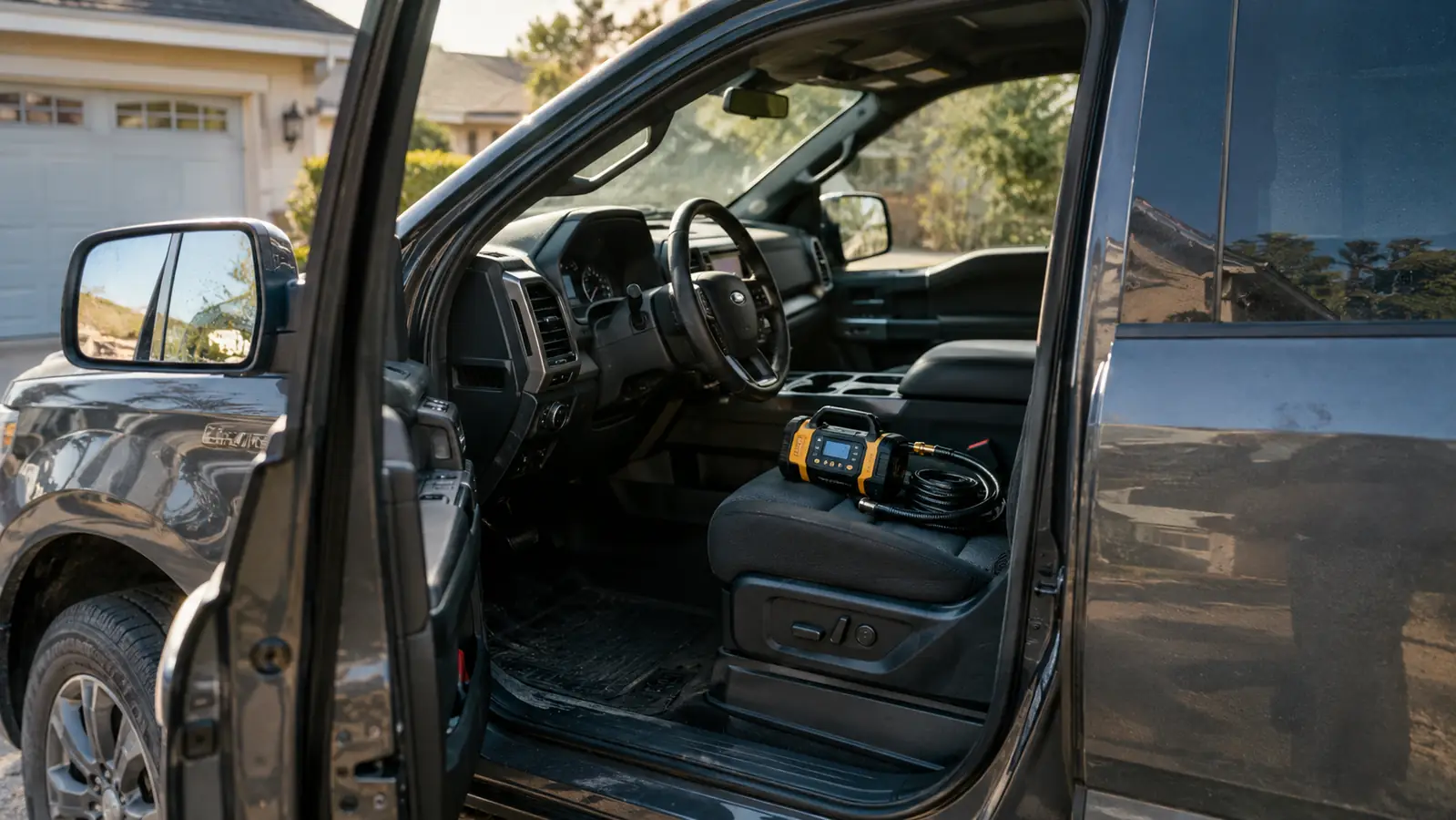
I keep a tire inflator in the back seat of my truck. Not the trunk, not the tool box, the back seat. There is a reason for that, and it has nothing to do with being prepared. It has to do with a Tuesday morning in May two years ago, when I walked out to the driveway at 6:40 and found the front driver's side tire on my F-150 sitting at 18 psi. I had a shop appointment in Broken Arrow at 7:30 that I could not miss. The nearest air pump with a working hose was four miles away, and the one at the gas station on Memorial had been out of order for a week. The AstroAI was already behind the driver's seat, where it has lived since. It had that tire back to 36 psi before the truck finished warming up. It has not left the back seat since.
I am Hank Moreland. I have been turning wrenches for about thirty years, mostly general repair, and I live in Tulsa, Oklahoma, where the summers are hard on tires and the roads are harder. My daily driver is a 2016 Ford F-150 XLT with the 3.5L EcoBoost, past 140,000 miles. This little inflator has topped off my own tires a hundred times, filled customer cars between jobs, and rescued strangers in parking lots more times than I can count. This is the long-term review I would have wanted to read before I bought it: what it is actually like to live with for two years, and what I would tell a friend who asked if it was worth the money.
The Quick Verdict
Two years of hard daily use and it still reads true, still shuts off on the number, and still runs cool. The cord is a little short for a full-size truck and it slows down in deep cold, but for the money, this is the inflator to keep in a daily driver.
Amazon Check Today's Price →The inflator that has lived in my truck for two years
I have recommended the AstroAI to more than a dozen customers. Most of them bought it. None of them have brought it back. If you want the same one, it is on Amazon, and the price has stayed reasonable the whole time I have owned it.
Amazon Check Today's Price on Amazon →How I've Used It
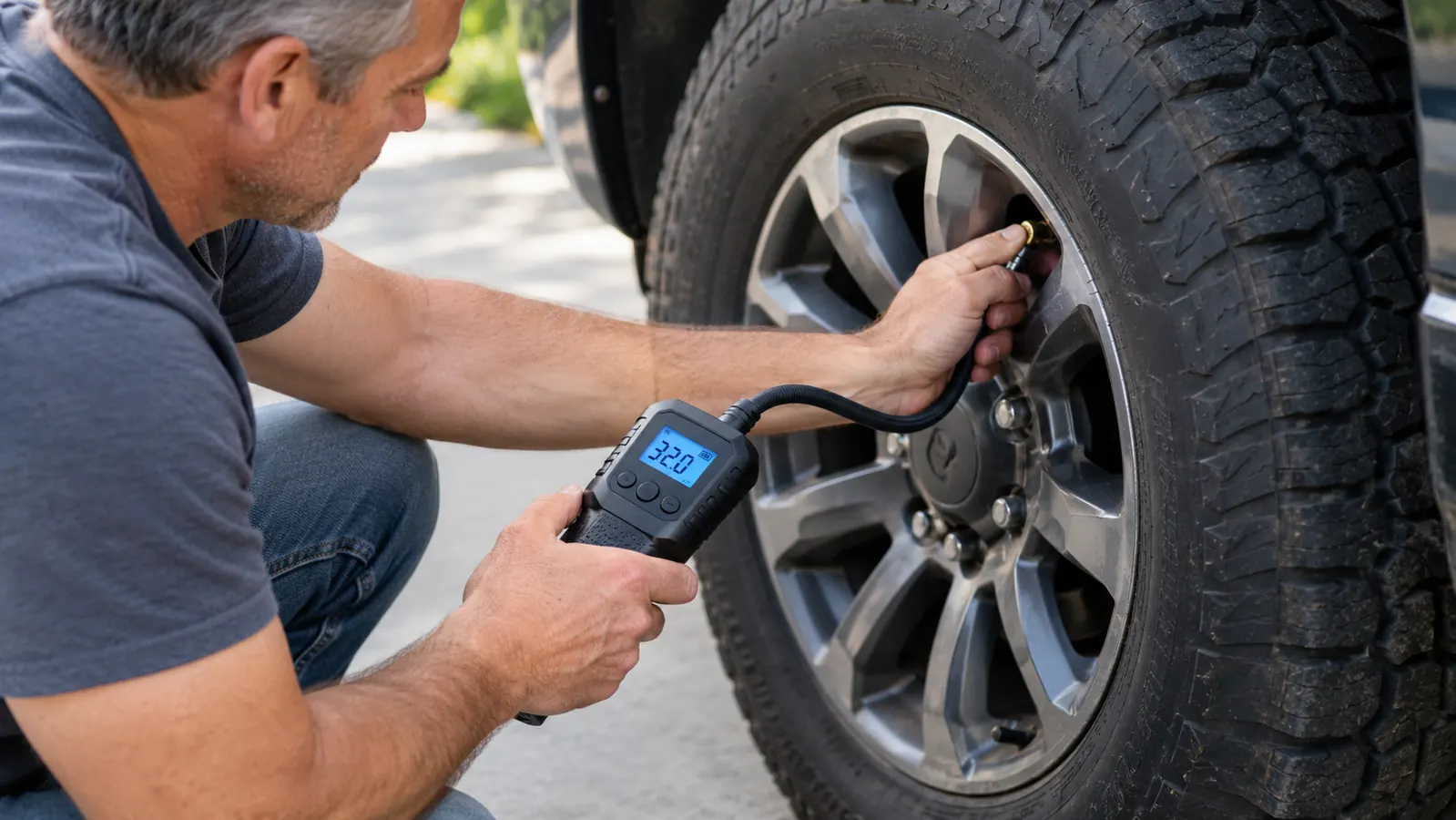
The short version: I use it about every two weeks, all year round. My F-150 calls for 36 psi in all four tires when cold, and I top off whatever has dropped. The AstroAI does that job in about a minute and a half per tire when a tire is only a few pounds down. I set the target with the up and down buttons, hit the power button, and walk to the next tire. The unit shuts off by itself at 36, so I do not have to kneel beside the wheel watching a gauge.
The longer version involves Tulsa weather. In July, when it is over 100 degrees, a tire that reads 33 psi on a cool morning can read 38 by mid-afternoon. That swing is normal and I do not chase it. But I do chase slow leaks. My truck has one tire that loses about two pounds a week, and I have been meaning to pull it and find the nail for a month now. The AstroAI has made that easy to live with. I check it every Saturday, top it off, and move on. It has never once overshot the target, and I have never had to reset the pressure mid-fill.
I have also used it on customer vehicles when a slow leak showed up between jobs, because it is faster to grab my own inflator than to roll out the shop air hose for a two-pound top off. It handled a half-ton Chevy, a Sprinter van, and a compact sedan on the same afternoon. The cord reached the van's rear tires without me moving the unit, which surprised me. I will get to the cord in a minute, because it is the one genuine complaint I have. Everything else has been a pleasant surprise.
What You're Actually Buying: The AIRUN H, Spec by Spec
The AstroAI AIRUN H is a 12-volt DC inflator. It runs off the vehicle's own power, so there is no battery to charge and no lithium pack that will be dead in three years. You plug it into a cigarette lighter or accessory socket, the digital display lights up, and you set your target pressure. The motor runs until it hits that number, then stops. That auto shut-off is the feature I care about most, because it means I cannot overinflate a tire while I am doing something else, and overinflation on a load-rated truck tire is just as bad as running it low.
The gauge reads to the tenth of a psi. That sounds like overkill until you are setting a tire to 36 psi and the factory spec is 36. My old shop gauge reads in two-psi steps. The AstroAI reads 35.8 or 36.1, and that precision is not a gimmick. It matters on a truck like mine, because the EcoBoost F-150 runs near its load rating most days, and a tire that is five pounds low runs hotter and wears the shoulders. I checked the AstroAI against my shop's digital gauge several times in the first month, because I do not trust a new tool until it proves itself. It matched every time.
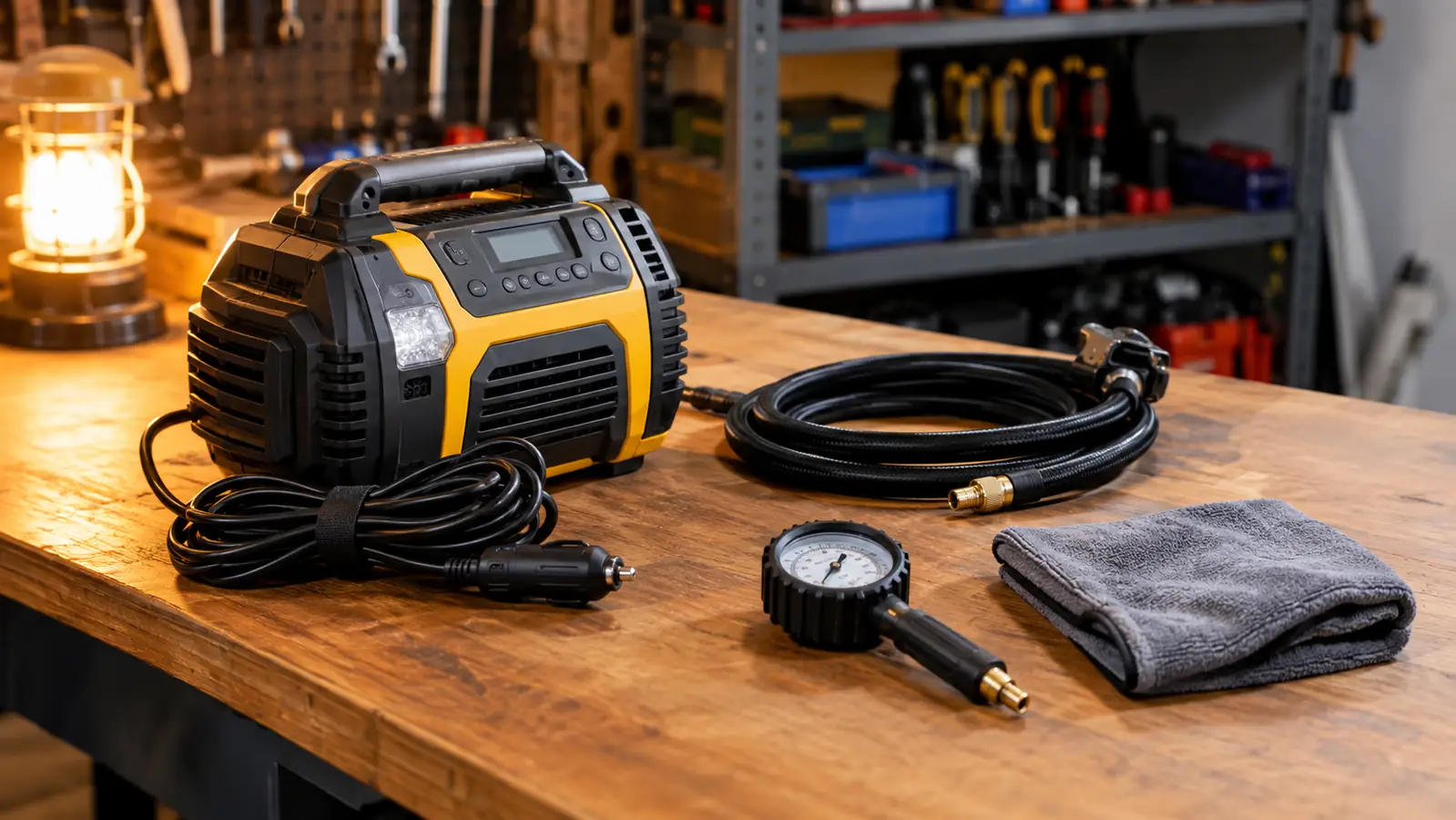
The hose is 9.8 feet, and the cord is the same length. That is the spec to pay attention to. On my truck, from the driver's side door, it reaches all four tires, but just barely on the rear passenger side. I have to stretch the hose across the tailgate on that one. On a long-bed truck, or any truck with a trailer in the way, you will be moving the unit around. It is not a deal breaker, but if I were buying again I would happily pay more for three extra feet of hose.
Real-World Performance: What the Clock Said
I timed the AstroAI the way I time everything in the shop, with a stopwatch, because I do not trust anyone's inflation claims, including my own. Here are the numbers from a 90-degree July afternoon in my driveway. A 265/70R17 tire on my F-150, at 24 psi, went to 36 psi in three minutes and forty seconds. That is a big tire for a 12-volt unit running off the truck's battery with the engine on. For comparison, a compact car tire at 28 psi took about a minute and a half to hit 34. A bike tire, the kind on my neighbor's mountain bike, went from flat to 30 psi in about forty seconds.
Is that fast? Compared to the shop compressor, no. My two-stage unit at the shop would fill that same truck tire in about twenty seconds. Compared to anything else you can keep behind a seat, it is competitive. What impressed me more than raw speed is that the motor note never changed. A cheap inflator labors, the pitch drops, and you can hear it working harder as the pressure climbs. The AstroAI runs at the same steady tone from start to shut-off. Heat is what kills these little 12-volt units, and this one runs cool enough to hold after three tires back to back.
The auto shut-off held up in real use. I set it to 36, walked into the garage to grab a socket, came back, and the tire read 36.0 on my shop gauge. On the tenth of a psi, that is the same number. I have used inflators with auto shut-off that stopped two or three pounds early because they were reading pressure at the unit, not at the tire. The AstroAI matches the tire. I checked this several times over the first two months, because I wanted to know exactly how much trust to put in it. The answer turned out to be total.
One honest note about cold weather. In January, when Tulsa hit 14 degrees, the unit was noticeably slower. Cold rubber is stiffer and the battery is weaker, so the motor works harder. It still got the job done, just not as quickly. That is physics, not a defect. I mention it because you will read reviews from people in Minnesota complaining about winter performance, and they are not wrong. But the same is true of every 12-volt inflator I have used, including units that cost three times as much.
What Wears Out First After Two Years
The inflator has spent every day of the last two years in the gap behind the driver's seat of my truck. That is not a gentle environment. It bakes through Oklahoma summers, it froze through two winters, and it has been bounced around by a hundred potholes on the Broken Arrow Expressway. The only sign of wear is the rubber hose. It is starting to show soft creases where it folds against the case, and I expect to replace it eventually. The pump, the gauge, the buttons, and the LED light are all original.
The buttons are worth a mention. They are rubber-covered, and after two years they still click cleanly. The screen has not fogged, which is the failure I see most often on digital gauges that live in hot vehicles. I cannot count how many customers have brought me inflators that read Err because moisture got into the display. The AstroAI screen is still legible in direct sun, which is more than I can say for the factory radio in my truck.
What has not happened is also part of the story. The case has not cracked. The cord has not melted at the plug, which is what happens when a unit draws too much current through a cheap connector. The little valve adapters are all still in their slots, which genuinely surprised me, because I lose things. The unit came with a small pouch and fittings for bike valves and inflatables. I have used the bike adapter exactly once, on my neighbor's kid's mountain bike, and it worked. The rest have sat untouched in the pouch for two years.
The Little Things: Cord, Light, and the Case
The built-in LED light seems like a gimmick until you are on the shoulder of a road at dusk with a tire that will not hold air. I have used it three times for exactly that, and it is bright enough to see the valve stem and the gauge without holding a phone in your teeth. It has never flickered, and it has never left me guessing where the valve stem was.
The 12-volt plug is a solid fit in the F-150 accessory socket. It does not wobble, and it does not pop out when the unit cycles on, which is a problem I have seen on cheaper inflators. The plug also stays cool. Some units draw so much current that the plug gets hot enough to worry you. This one does not, even after a full top-off cycle.
One tip I learned the hard way: run the engine while you use this on a full-size truck. The inflator draws real current, and while it will work with the engine off, it is easier on the battery and a little faster on the tires if the alternator is spinning. That is true of any 12-volt inflator. The manual does not say it, so I am saying it here. I have also learned to wrap the cord and hose back the way they came out of the box. If you shove it all behind the seat in a tangle, the hose creases faster. Two minutes of neat wrapping is why mine has lasted this long.
What I Liked
- Auto shut-off reads true to the tire. I checked it against my shop gauge repeatedly, and it never overshot by more than a tenth of a psi.
- Runs cool even after three tires back to back, which is what kills cheaper 12-volt units.
- Screen stays legible in direct sun and has not fogged after two Oklahoma summers in a hot truck.
- Solid 12-volt plug that does not wobble or pop out, and a case that has survived two years behind the driver's seat.
- Set-and-walk-away design makes topping off four tires a five-minute job.
Where It Falls Short
- The 9.8-foot hose and cord just barely reach the far rear tire on a full-size truck. Plan on moving the unit.
- Slow in deep cold. It works in January, but it works grudgingly.
- The rubber hose is creasing after two years and will likely need replacing before the pump does.
- No built-in battery. If the vehicle's 12-volt socket is dead, the inflator is dead too.
I set it to 36, walked into the garage to grab a socket, came back, and the tire read 36.0 on my shop gauge. On the tenth of a psi, that is the same number.
Who This Is For
This is for the owner who checks tire pressure at the gas station and always finds the pump broken or the hose too short to reach. It is for anyone who hauls, tows, or drives a truck that runs different pressures front and rear, because the set-and-walk-away shut off makes it easy to top off four tires in five minutes without kneeling in the dirt. It is for the person who keeps a vehicle for years and maintains it themselves, the same person who changes oil in the driveway and wants a tool that still works two years later. That person is me, and this is the inflator I keep.
Who Should Skip It
If you only drive a car that never leaves the city and you check air at a full-service station, you do not need this. If you want to fill a completely flat truck tire on the side of the highway, a 12-volt inflator is the wrong tool, and you want a full-size spare or a real compressor. And if the cord length is going to annoy you, spend more on a unit with a longer hose. The AstroAI is a strong value, but the reach is what it is. Buy it knowing that, not hoping otherwise.
Two years behind my driver's seat, and it still works like day one
That is the whole review in one sentence. If you have been putting off buying a tire inflator, this is where I would start. Check today's price on Amazon and decide for yourself.
Amazon Check Today's Price on Amazon →