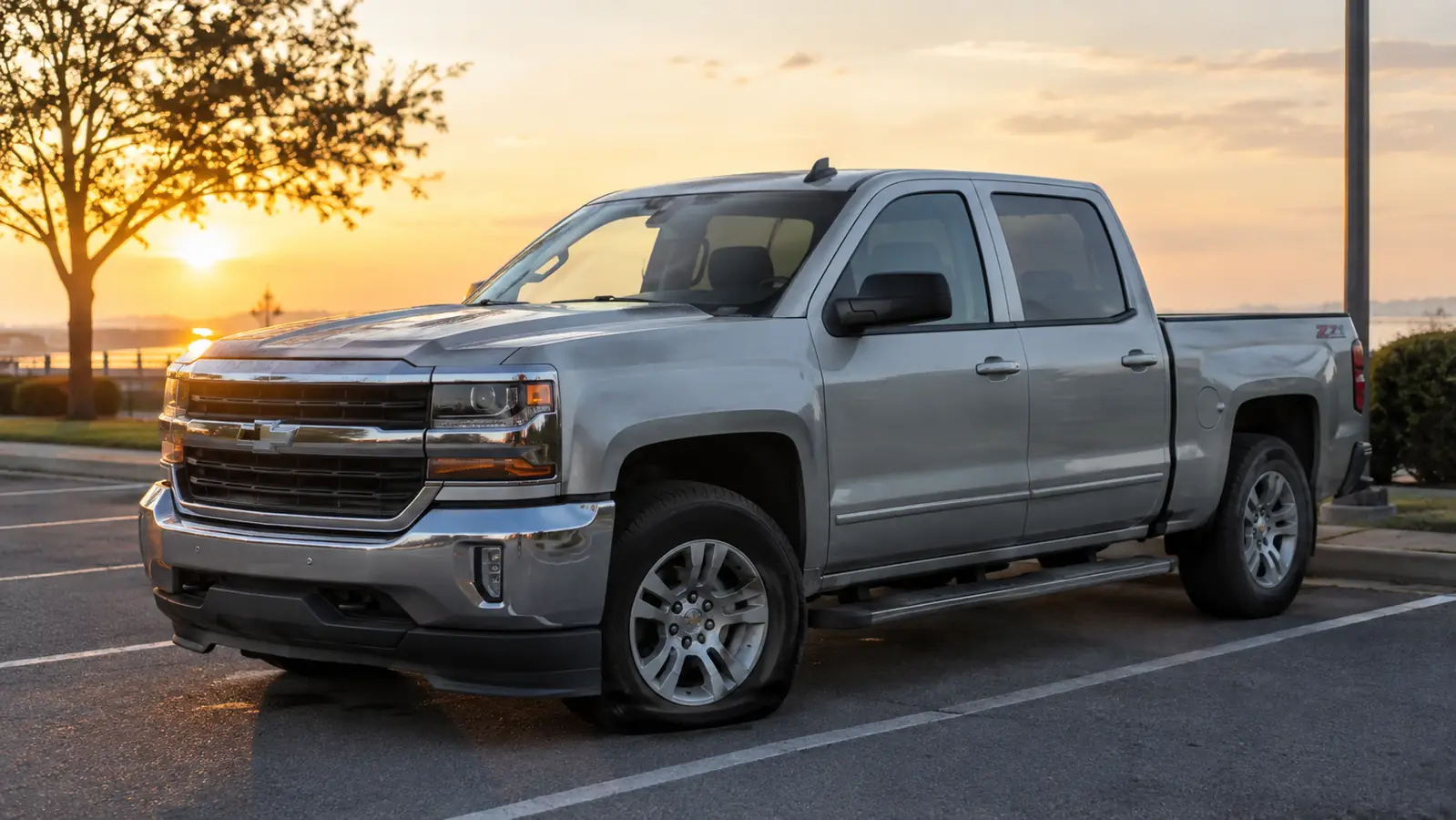
It was a Tuesday morning, about 6:40, and I was already running late. I had just pulled into the parking lot of a parts supplier on the east side of Tulsa when I heard it: a rhythmic thump-thump-thump from the front of my 2016 F-150. I parked, got out, and looked. The driver's side front tire was down to the rim. Not a slow leak. A flat.
I've been a working mechanic for about 30 years, so my first thought wasn't panic. It was annoyance. I knew exactly what was coming: I could call a tow truck, wait an hour, pay for the privilege, and still have to deal with the tire once I got home. Or I could pull the spare out of the bed, but the spare was low too, because I had been meaning to top it off for two weeks. That's the kind of thing that happens when you drive a 140,000-mile truck and treat it like a workhorse.
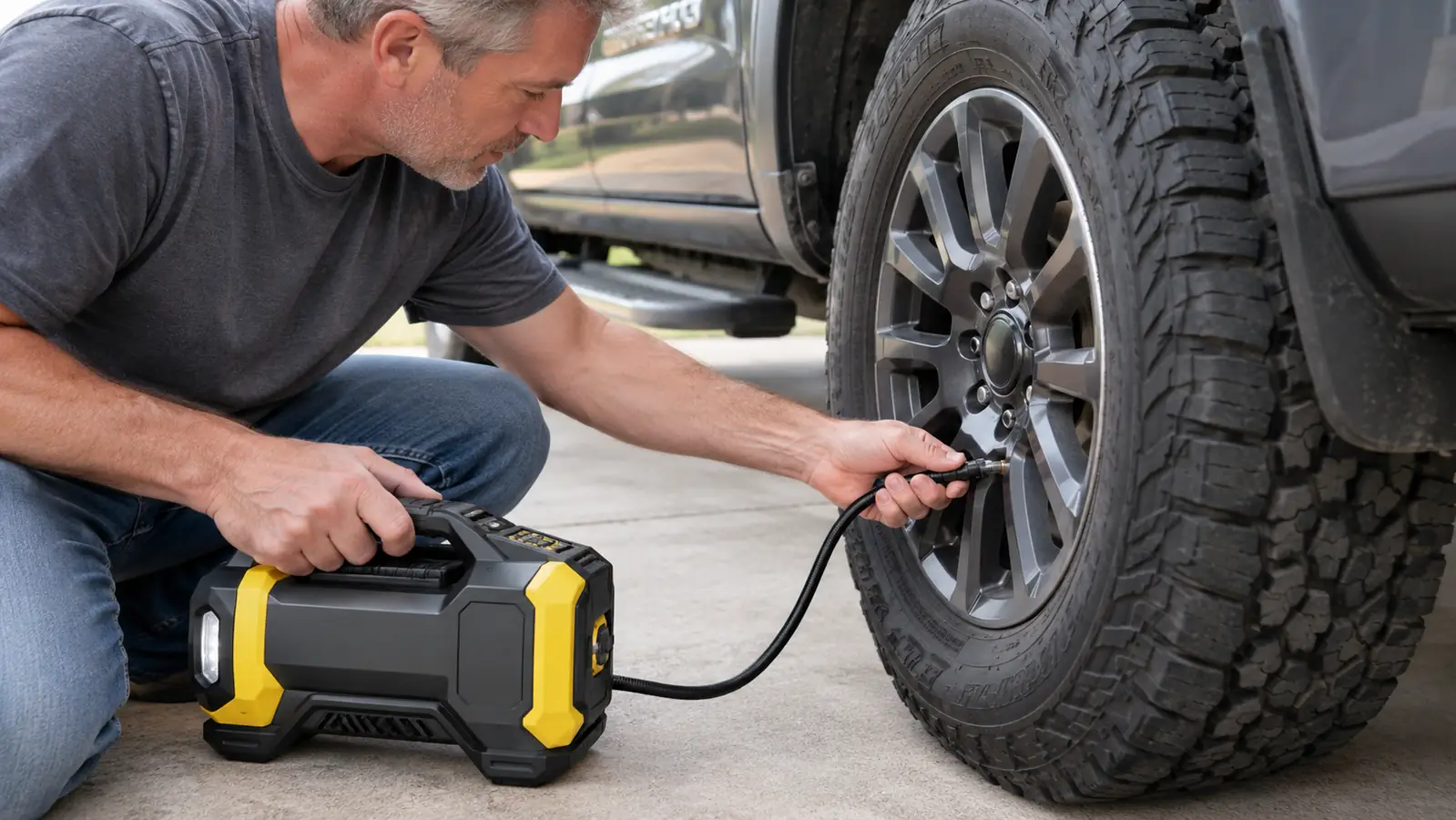
Then I remembered the AstroAI tire inflator I had thrown behind the back seat a few months earlier. I had bought it on a whim, mostly because I was tired of using the air hose at gas stations, the ones that never seem to read the same pressure twice. I had tested it once in my driveway, shrugged, and forgotten about it. That morning, it turned out to be the difference between a ruined day and a 20-minute detour.
I popped the hood, clipped the 12V plug into the cigarette lighter, and screwed the hose onto the valve stem. The digital gauge lit up and read 8 PSI. I set the target to 35 PSI, hit the button, and stood there with my coffee while it worked. Nine feet of cord meant I didn't have to contort myself or move the truck. About four minutes later, it clicked off on its own at 35 PSI. I drove straight to the shop, checked the tire, found a nail, and patched it. Total time from flat to rolling again: under 15 minutes.
The thing that sold me wasn't the speed. It was the auto shut-off. I set 35 PSI, walked away, and it stopped at 35 PSI. No guessing, no over-inflating, no standing there watching a gauge.
The same inflator that saved my Tuesday morning
If you drive a truck, a car, or anything with tires, this is the kind of tool you don't think about until you need it. And when you need it, you need it to work.
Amazon Check Today's Price on Amazon →Since that morning, the AstroAI has lived in my truck full time. Not in the garage, not in the house. In the truck. Because the one time you don't have it is the one time you'll wish you did. I've used it on my own F-150, on a coworker's car that had a slow leak, and on a neighbor's trailer tire that was so low I could see the sidewall flexing. Every time, the routine is the same: set the pressure, press the button, let it run. The digital readout is accurate enough that I trust it over the gauge on the shop's air line, and I've checked it against my own calibrated gauge more than once.
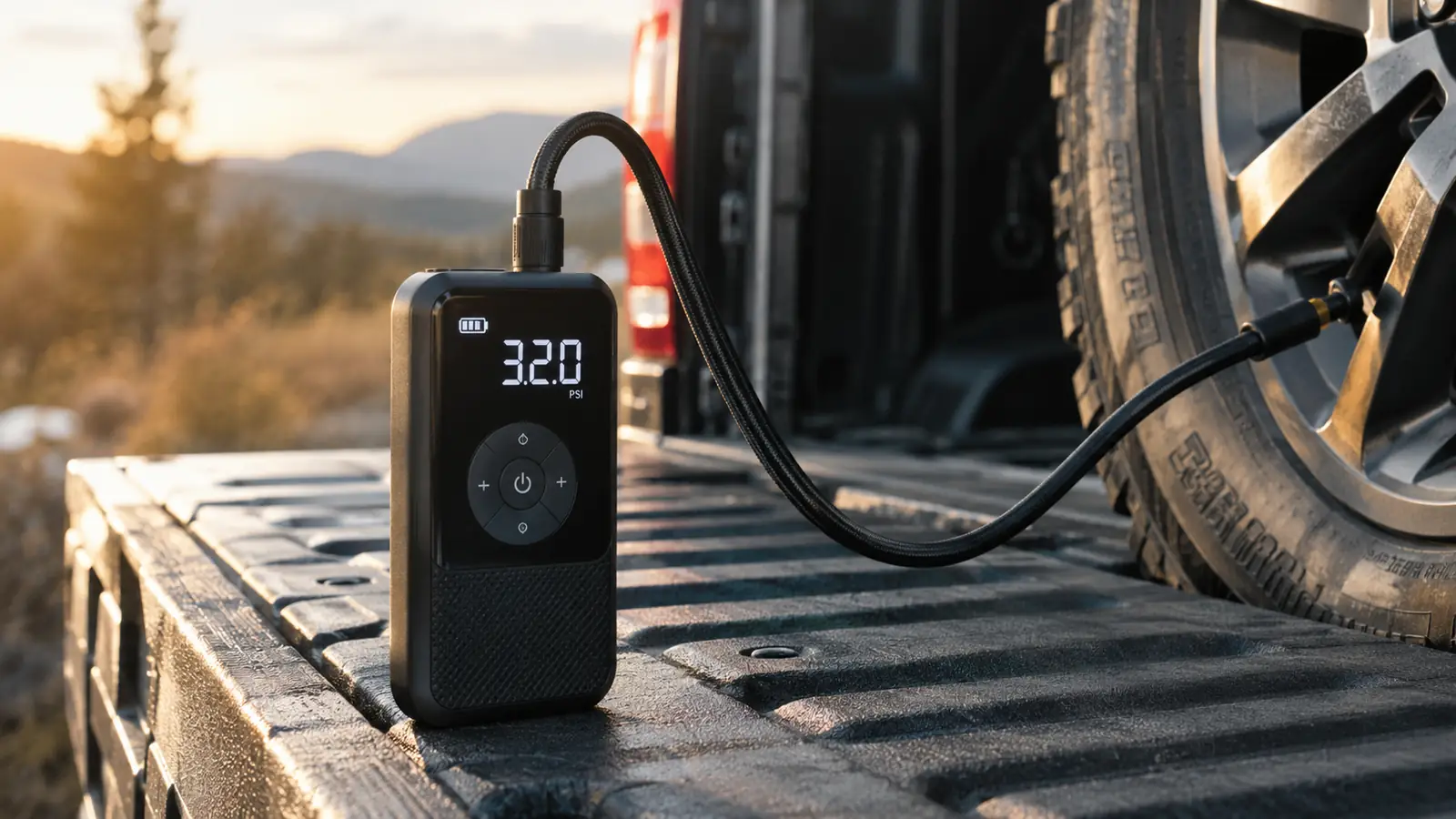
The cord is 9.8 feet, which sounds like a small detail until you're parked in a lot and the valve stem is on the far side of the tire. The LED light has saved me twice, both times at dusk, both times when I was too stubborn to pull the truck into better light. And the auto shut-off is the feature I didn't know I needed. I set it, I walk away, I come back when it clicks. It has never once overshot the pressure I set.
Now, I'm not going to tell you this thing is built like a shop compressor. It's not. It's a portable unit, and it's slower than the big stuff. If you're airing up a set of 35-inch mud tires from flat, you're going to be waiting a while. For a passenger car, a light truck, a motorcycle, or a bike, it's plenty. I've also learned to use it in short bursts in the summer, because Tulsa heat and a hard-working little compressor can make the unit warm to the touch. That's not a complaint. That's just physics, and it's worth knowing before you buy.
The other thing I'll tell you is this: I've had cheap inflators before. The kind that come in a plastic bag with a gauge that's wrong by 10 PSI and a motor that sounds like it's dying. The AstroAI is not that. It's a real tool, the kind you'd actually reach for, and after months of living behind my back seat, it still reads true and starts on the first try every time.
What I'd Tell You If We Were Sitting at My Kitchen Table
If you were sitting at my kitchen table, coffee in hand, and you asked me whether you should keep one of these in your vehicle, I'd say yes, and I'd say it without hesitation. Not because it's the most exciting tool you'll ever own. It's not. But because a flat tire is one of the few problems that can happen to anyone, anywhere, at any time, and this is the difference between handling it yourself and waiting on someone else. Check your spare's pressure while you're at it, because a spare that's flat is just a heavier version of no spare at all. And if you do pick one up, set it to the pressure on your door jamb sticker, not the number molded into the sidewall. That sticker is what the engineers actually want in the tire.
Keep one behind your seat before you need it
The AstroAI tire inflator is the kind of tool that pays for itself the first time it saves you a tow. Set your pressure, let it work, and get back on the road.
Amazon Check Today's Price on Amazon →