
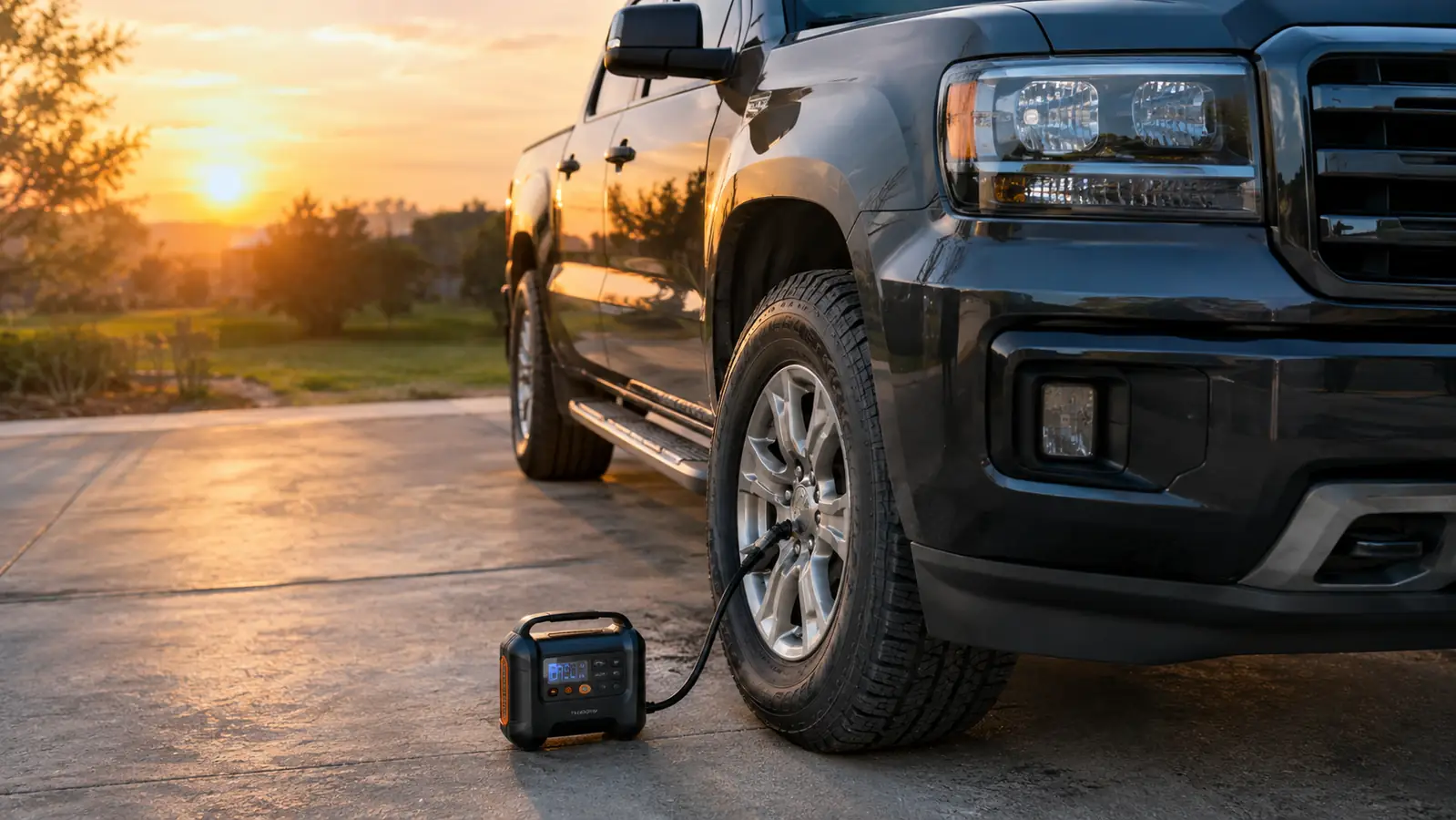
The first time I used the AstroAI AIRUN tire inflator, it was a Sunday morning in my own driveway. My 2016 F-150 had sat overnight with a slow leak in the left front, the dash read 28 psi, and I had a two-hour drive ahead of me. I had read the specs the week before, but that morning was the real test: cold concrete, a half-empty cup of coffee, and a tire that needed seven pounds of air before I could leave.
What I found surprised me, and not the way the product listings suggest. This is an honest review from a working mechanic, and the honest part is this: the AstroAI AIRUN is not a shop compressor, and it is not trying to be one. It is a portable 12-volt top-off tool that does one job well. Knowing what that job is, and what it is not, is the difference between being happy with this thing and being annoyed by it. I have used both kinds of inflators, and the ones that disappoint are the ones that pretend to be everything.
The Quick Verdict
A dependable 12-volt top-off tool with an honest auto shut-off. It is slower than a shop compressor and it gets hot on long fills, but it stops at the pressure you set and it has earned a permanent spot in my truck.
Amazon Check Today's Price →The 12V Inflator That Actually Stops at the Right Pressure
After months of Sunday-morning top-offs and pre-trip checks, the AstroAI AIRUN has been the most dependable inflator I have kept in the truck. It is not the fastest tool in my garage, but it has never left me standing next to an overinflated tire.
Amazon Check Today's Price on Amazon →How I've Used It
That first Sunday, I set the target pressure at 35 psi, the number on the door sticker, pressed the start button, and stood there watching the digital readout climb. From 28 to 35 took a little over three minutes. That is not fast, and I want to be clear about that, but it was accurate. When the unit clicked off, it showed 35.0, and my separate digital gauge read 35.1. That is the whole review in one number.
Since then, it has become part of a monthly routine. Every couple of weeks I check the pressures on the truck, and the AstroAI tops off whatever is low. Before longer trips I do the same check, and because the auto shut-off is honest, I can set the target and walk back into the garage instead of crouching next to the tire waiting for the gauge to stop moving. The feature that sounds like marketing is the one I trust the most.
The LED light gets more use than I expected. I have topped off tires at dusk more than once, and being able to see the valve stem without holding a phone flashlight in my mouth is worth something. The 9.8-foot cord plus the hose reaches all four corners of the truck without moving it, though the rear tires are the far edge of that reach. It lives behind the seat now, and it has been there since spring.
What Nobody Tells You About 12V Inflators
The first thing nobody tells you is that the cigarette lighter outlet is the bottleneck. A 12-volt outlet can only deliver so much current, and the compressor is deliberately limited to stay within that. This is not a flaw in the AstroAI; it is physics. Every 12V inflator on the market lives under the same ceiling. The result is that it is slow. On a car tire, from a few pounds low, it is fine. On a truck tire that is seriously low, you are going to stand there for a while.
The second thing is heat, and this is the one that gets people. Run any small compressor for several minutes straight and the head gets hot. The AstroAI is no different. The manual mentions rest periods, and after months of use I can tell you that advice is real. On a long fill, I let it run its cycle and then give it a few minutes before the next tire. The 12-volt plug also gets warm to the touch. That is normal, but if it is hot enough that you do not want to hold it, let everything cool down before you keep going.
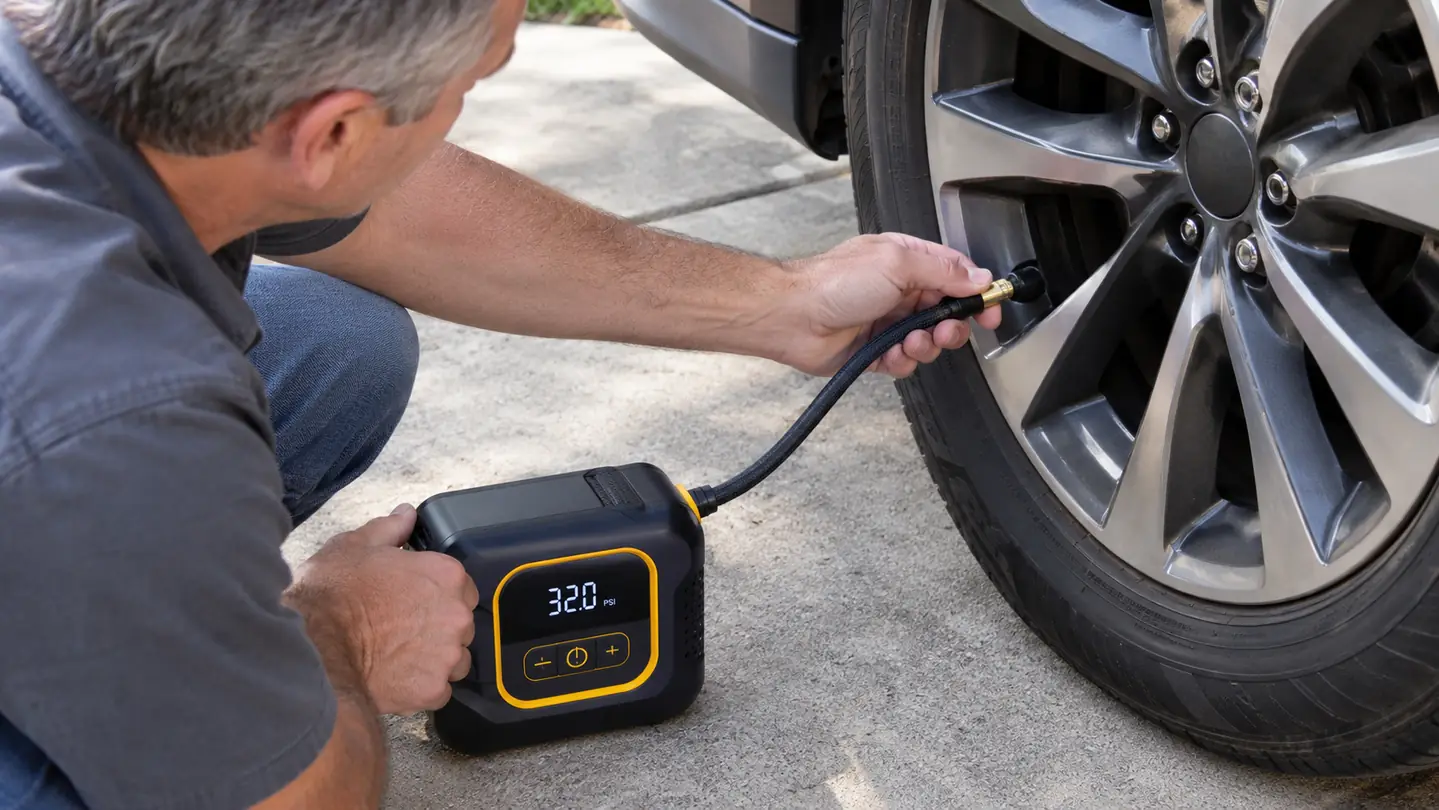
The third thing is how the gauge works. The display shows the live pressure in the tire as it fills, and you set the target pressure before you start. Some people expect the display to show the target while it is running; it does not. It shows the tire. Set 35, and it stops at 35. Once you understand that, it makes sense, but it is a small learning curve that nobody mentions in the listing.
The last thing I will tell you is that the accuracy of the digital gauge is the feature you are actually paying for. I have watched gas station gauges read 5 pounds off. I have seen pencil gauges stick. The AstroAI reads against the tire itself, and it stops when the tire hits the number. That is the whole point, and it is why the auto shut-off matters more than the speed.
The Auto Shut-Off Is the Real Story
I have used inflators that require you to stand there with a separate gauge, clicking the switch off and on until you hit the number. The AstroAI stops itself, and it is accurate. I tested it against my shop gauge more than once, and it is consistently within a pound, usually within half a pound. That is better than the accuracy of most gas station air hoses I have checked, and I have checked plenty of those over 30 years.
The set-and-forget nature changes the chore. Instead of a task that requires your attention for the whole fill, it becomes a task you start and walk away from. For someone who checks tire pressures monthly, that is the difference between actually doing it and putting it off. I have talked more than one customer into keeping a decent inflator at home for exactly this reason.
One caution I will pass along: set the target a little lower if the tire is warm. A tire that has been driven reads higher than a cold one, and the pressure climbs as the tire heats up on the road. The number on the door sticker assumes a cold tire. So if I am topping off a tire that has been sitting all night, I use the sticker number. If the truck has been driven, I set a couple of pounds lower and call it good.
Where It Falls Short
Speed is the honest weakness. From 28 psi to 35 on my truck took just over three minutes. From a fully flat truck tire, it would take a long time, and it would need rest periods along the way because of the heat. If you are airing up a truck tire from flat, this is not the tool you want. That job belongs to a shop compressor or a much larger portable unit. For a car tire, it is fine. For a pickup that is merely low, it is fine. For a pickup that is flat, make other plans.
The reach is workable but not generous. The cord is 9.8 feet, and the hose adds a bit more. On the truck, all four tires are reachable without moving it, but the rear tires are at the limit. If the truck is backed into the garage or parked next to something, you will be working at the end of the hose. I keep the inflator in the truck, which is where it earns its keep, and the reach has not been a problem on the road.
It is loud, and it vibrates. That is not a dealbreaker for a tool you use for a few minutes at a time, but it is worth knowing before you buy. If you inflate a tire at night in a quiet neighborhood, the neighbors will hear it. The digital readout is bright, which helps in the dark, and the built-in LED makes the whole thing usable after sunset, but the noise is what people notice.
The 12-volt plug fits snugly, which I consider a good thing, but it matters where your outlet is. In the F-150 the outlet is easy to reach. In some cars the outlet is in a shallow or awkward spot, and the weight of the plug can be annoying. If you plan to use this in a vehicle where the outlet is behind something or facing the wrong way, test the fit before you rely on it.
The honest framing is this: it is a top-off tool, not a tire shop. I keep it in the truck because it handles the slow leak, the cold morning, the before-trip check. For those jobs it is the right tool. The moment you ask it to do heavy work, like filling a large truck tire from single digits, it will show its limits, and you will stand there a long time.
What I Liked
- Auto shut-off is accurate, within a pound of a shop gauge, usually within half a pound
- Set the target pressure and walk away, no standing over the tire
- Digital readout is bright and easy to read in the dark
- Built-in LED light is genuinely useful at dusk
- The 9.8-foot cord reaches all four corners of a pickup without moving it
- Compact enough to live in the truck full time
Where It Falls Short
- Slow on truck tires, especially from low pressure
- Needs rest periods on long fills or the head gets hot
- Loud, and it vibrates noticeably
- The 12-volt plug can be awkward in vehicles with shallow outlets
- Not a tool for airing up a fully flat truck tire
How It Has Held Up
I have had mine since spring and used it every couple of weeks through a Tulsa summer. It still reads within half a pound of my shop gauge. The hose connector still seats firmly on valve stems, and the digital display has not fogged or dimmed. For a tool that lives in a truck, through heat and cold, that is the part that matters.
A few things I check on it from time to time. The rubber hose gets looked over for cracks, especially after a summer of baking in the cab. The valve connector picks up dirt and grit, so I wipe it before I use it. And I keep the unit out of direct sunlight when it is stored, because heat is hard on any plastic and rubber, and Tulsa summers provide plenty of it.
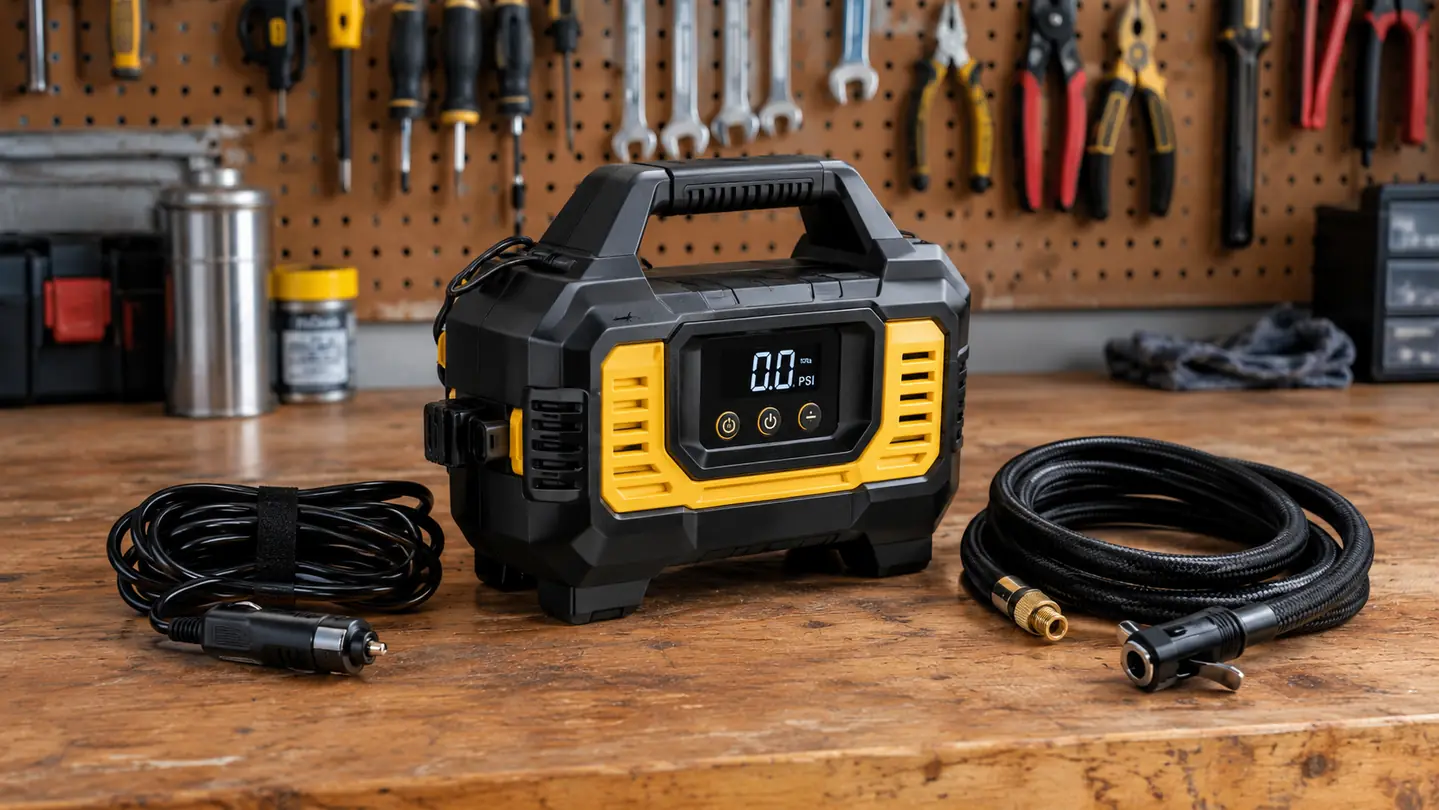
The unit is compact enough to stay out of the way behind the seat, and the cord and hose store neatly enough that it does not tangle. It has lived in the truck through a Tulsa summer, where a cab can get hot enough to soften a chocolate bar, and it still works like the day I bought it.
From 28 to 35 psi on a 140,000-mile F-150, it took just over three minutes and stopped at 35.0. That is the whole review in one number.
Alternatives I Considered
Before I settled on the AstroAI, I looked at cordless inflators. The appeal is obvious: no cord, no need to reach an outlet. But a cordless unit runs on a battery that you have to remember to charge, and batteries lose capacity as they age. The 12-volt version plugs into a truck that is already there. For my use, monthly top-offs and pre-trip checks, the corded unit wins. I never think about whether it is charged, because it does not need to be.
I also considered a small shop compressor for the garage, and I will be honest that I have one at work. But a shop compressor is not something you carry in a truck, and it needs power and space. The AstroAI fills a different job, the job that happens at a gas station or in a driveway, and it does that job without asking for anything except a working 12-volt outlet.
The alternative most people actually use is the gas station air hose. I have seen the gauges on those things lie, and I have spent 30 years undoing the damage of overinflated tires. A gauge that stops at the number you set removes the guesswork, and that alone is worth having.
Who This Is For
This inflator is for the person who checks their own tire pressures, tops off before a trip, and wants a dependable tool that lives in the truck full time. It is for the DIY owner who changes their own oil and washes their own car and does not want to stand at a gas station air hose on a cold morning. If you are that person, the AstroAI will earn its spot and then some.
Who Should Skip It
If you air down your tires for off-road driving and need to refill from 15 psi, you want a bigger compressor, and you probably already know that. If you regularly deal with fully flat truck tires, this is not the tool for that job. If the fastest possible fill time is your priority, a cordless unit or a shop compressor will beat it. And if you expect shop-compressor speed out of something that plugs into a cigarette lighter, you will be disappointed. This is not that tool, and it does not pretend to be.
After months of use, the AstroAI AIRUN is the tool I reach for every time a tire is low. It is not the fastest, and it is not the most exciting, but it is accurate, it stops at the pressure I set, and it has never let me down. For a working mechanic who has seen every gimmick in the book, that is the highest compliment I can give.
Bottom Line: A Dependable Top-Off Tool That Earns Its Spot in the Truck
The AstroAI AIRUN is not the fastest inflator, and it will not air up a flat truck tire. It is an accurate, dependable 12-volt tool that stops at the pressure you set, and it has earned a permanent place in my truck. If that is the job you need done, it is worth checking today's price.
Amazon Check Today's Price on Amazon →